Sustainability communication
How does Tchibo inform about sustainability?
Customers in focus: The prerequisite for promoting responsible consumption is not only the offer of sustainable products, but also supporting sustainability communication, as this provides customers with a basis for decision-making and contributes significantly to increasing product acceptance.
- Sustainability in general and across the board: We advocate authentic and credible corporate communications. In this area in particular, we document our sustainability commitment in detail, including strategies, sustainability reports, policies, guidelines, memberships, as well as the goals and results of our sustainability efforts – these are accessible to everyone.
- Product-related: We provide product information, especially on materials, both on the packaging and in more detail online. Sustainability elements are clearly visible on the front and back of the packaging, e.g., with green ribbons, to make sustainable products easier to identify. Certified materials are marked with the appropriate seal.
We provide information in particular via the following communication channels:
Online Platforms
Information about our sustainability commitment can be found online on the following platforms:
Our corporate website: www.tchibo.com
Our webshop: www.tchibo.de
Our sustainability website: www.tchibo.com/nachhaltigkeit
Tchibo Blog
Stories and background reports are also regularly published on the Tchibo blog:
LinkedIn and other Social Media Channels
The Tchibo LinkedIn corporate account occasionally features sustainability information. Employees also post on specific topics via their personal accounts.
Print Media
Our own POS print media, such as the weekly Tchibo Magazine or the monthly online order catalog, contain both product and general sustainability information – either on the product pages or on dedicated double-page spreads on the topic of sustainability.
Podcast
Fair lifestyle meets coffee enjoyment: This Tchibo corporate podcast, "5 Cups a Day," is for committed people interested in sustainable living and who enjoy listening to inspiring personalities. It appears freshly brewed every two weeks.
Dialogue on an equal level: The exchange with our customers is of utmost importance to us: We listen to them, are open to criticism, consider their wishes and suggestions, and align our actions accordingly. We practice this open dialogue across all communication channels, especially those with response and dialogue functions. For example, social media, customer service, and our online shop encourage customers to contact us with questions – be it via email, message, or a contact form.
Makes a difference: To consolidate our sustainability commitment across all product ranges and make it easily visible to our customers, we have developed an overarching sustainability banner. With this overarching banner, we want to provide a common umbrella for all our sustainability activities. This communicative banner is used for all topics and products that meet the sustainability standards applied above. We want to make it clear that every single choice makes a difference.

KLARTEXT | SPOTLIGHT: For communicating with our stakeholders, we have developed a regular event format. SPOTLIGHT (in German: KLARTEXT) is our dialogue series designed to foster exchanges with stakeholders on current sustainability topics of ecological or social relevance. Our goal is to promote cross-industry discourse and bring together insights from a wide range of perspectives. Why? To share experiences, broaden our horizons, learn, and critically reflect on our own actions. After all, the aim of KLARTEXT is not for everyone to agree. On the contrary: we want to provide space for diverse opinions and use them to continue our own development.
KLARTEXT | SPOTLIGHT. Will we still have coffee tomorrow?
On responsibility, prices, and what's at stake for our favourite drink
Coffee is at a tipping point worldwide. Climate change, crop failures, fragile supply chains and highly volatile global markets threaten the future of a product on which millions of people in the countries of origin are economically dependent. But coffee lovers around the world are also affected. Experts predict that in 20 years' time, it will no longer be possible to grow coffee in parts of the world. The situation is similarly dramatic for cocoa.
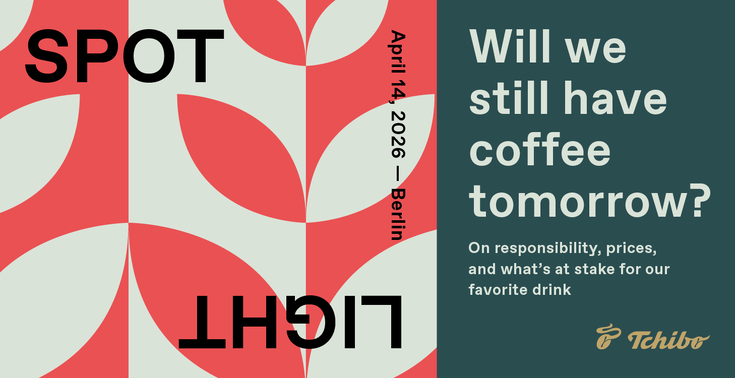
14. April 2026
Berlin
English, German
KLARTEXT | SPOTLIGHT. Is circularity going round in circles?
On dismantling old structures and creating new business cases for practical implementation
Circularity is considered key to sustainable business. In reality, however, new customer needs encounter marketing and sales functions; materials expertise meets procurement and quality assurance; and new business models clash with long-established processes and guidelines. The big question remains: How can we move beyond merely translating these tensions between new ideas and old structures into pilot projects and niche applications, and instead achieve a shift within the mass market?
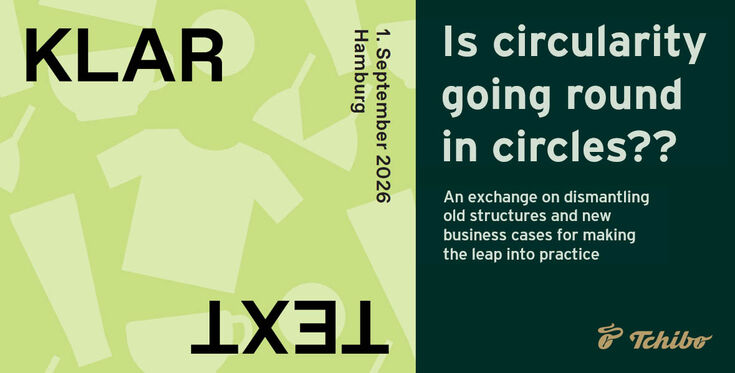
01.09.2026
Hamburg
German