The name says it all (coffee) programme (8): Peru
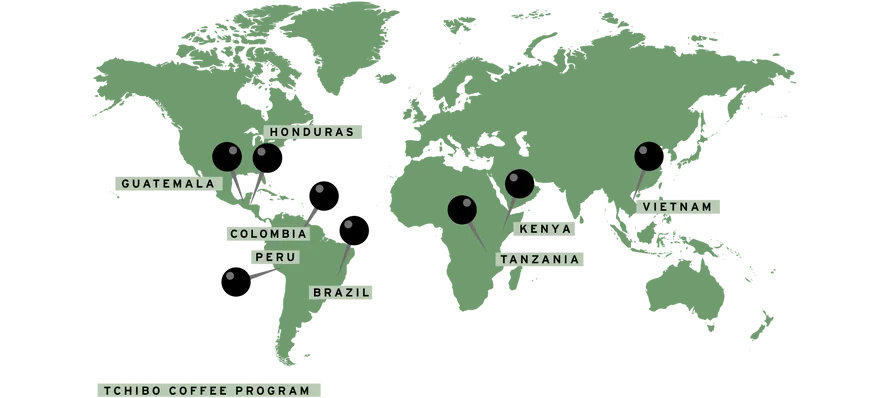
There is more news about our Tchibo coffee range. We have added another country: Peru!

After adding Kenya to our coffee programme in the middle of last year, we are now turning our attention to South America. And, of course, we would like to introduce you to this country, which we have now added to our coffee programme: Buenos días Peru!
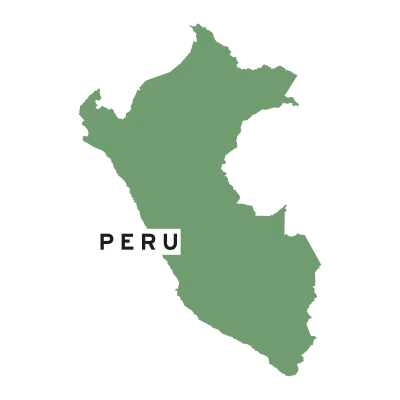
When you think of Peru, many surely think of Machu Picchu, the ancient Inca city, Lake Titicaca, alpacas, llamas or even Paddington Bear, who also originally came from Peru. But besides all that, Peru is of course much more than that! Among other things, it is also one of the largest coffee-growing countries: Peru is the third largest coffee producer in South America and the ninth largest worldwide. Coffee is grown on approximately 350,000 hectares, mainly in the tropical climate at altitudes of 1,000 to 1,850 metres. Peru is home to many small, family-run coffee farms.
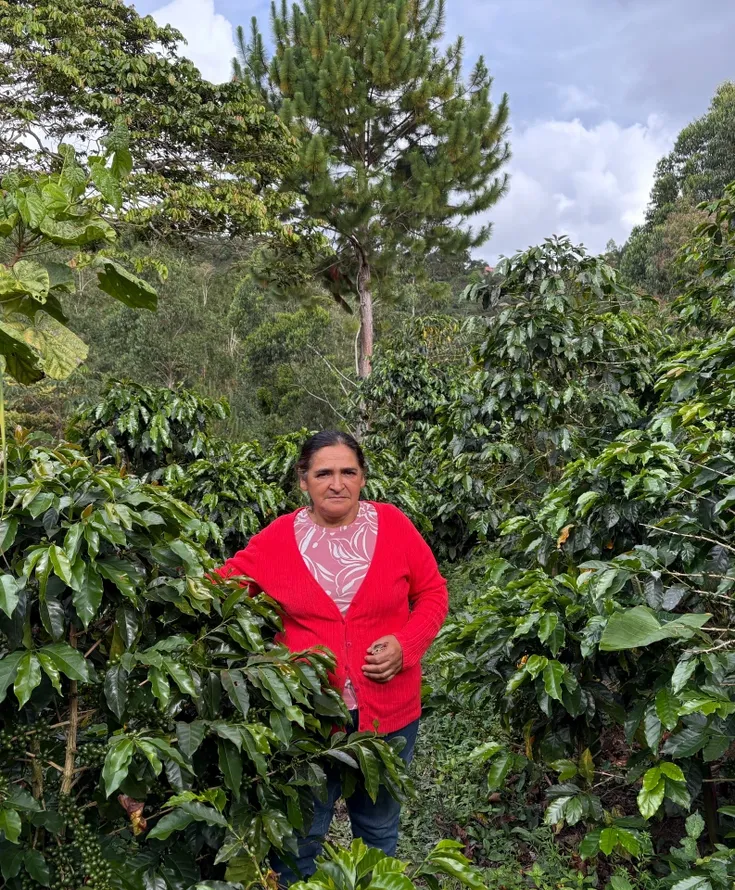
‘It is currently a major challenge to continue growing coffee. Pests and diseases are causing significant losses, and changing rainfall patterns are reducing crop yields. Many people are abandoning coffee and switching to crops such as cocoa. But we want to keep fighting because we love the product.’
Corali, coffee farmer from Peru
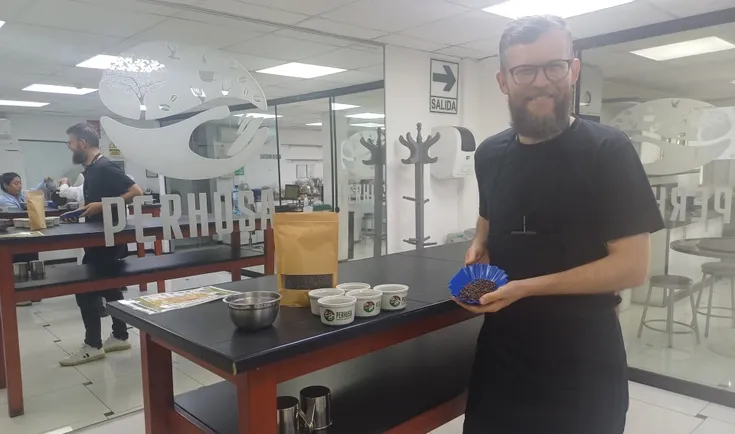
To learn more about the challenges and unique characteristics of coffee cultivation in this country, Dorian Goraj from the CR team takes us back to the source today. In this interview, he tells us what the situation is like on the local level and what measures are being taken as part of the coffee programme.
Why Peru?
Peru is an important coffee-growing country for Tchibo. Coffee from Peru is used in products such as Latin Grande, Feine Milde, Beste Bohne and Barista. The analyses we receive from Enveritas have shown an increased risk of poverty, soil erosion and water pollution in the Junín region, from which we source a lot of our coffee. Harvest yields there are even lower than the national
average, and almost a third of farmers suffer crop losses of at least 50% due to pests and diseases. This is where our work begins.
What does that mean specifically? What measures are being taken? With what objectives?
Junín is located east of the capital Lima and is characterised by agriculture. Coffee cultivation is a central part of life for many farmers. Together with our supplier Perhusa, we have developed a programme concept that addresses the aforementioned risk areas – for example, by increasing productivity and quality and promoting climate-resilient and regenerative cultivation. In
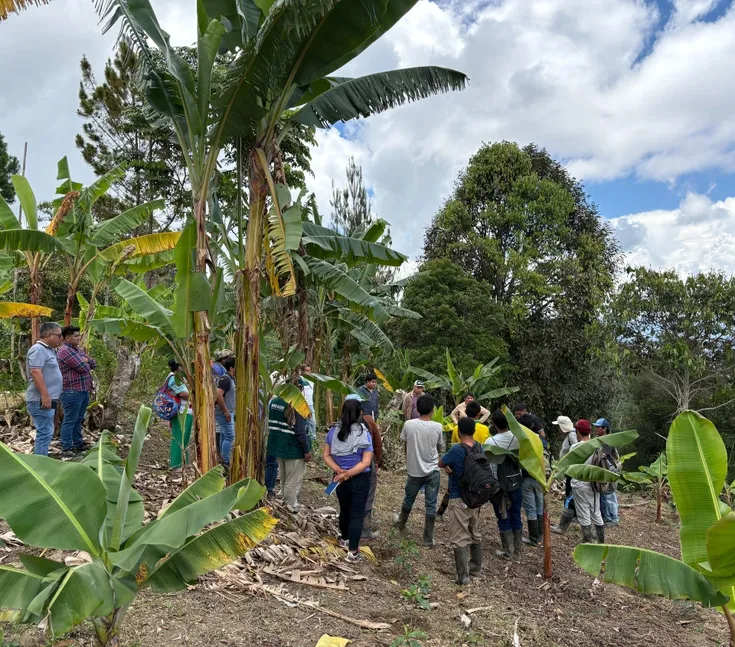
addition, for several years now, many young people have been leaving coffee cultivation to find work in metropolitan areas. Here, we want to work with schools to inspire young people about the opportunities in the local coffee industry.
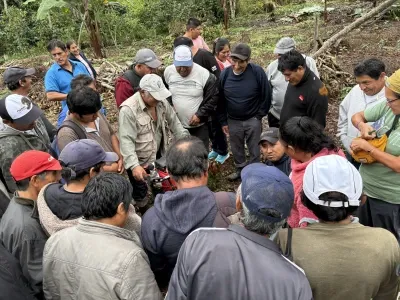
Over the next 5 years, our programme will involve working with 1,800 farmers in four provinces. To this end, we have put together a team of 6 agronomists who will conduct training sessions on demonstration areas set up locally. These demonstration areas belong to selected farmers and are distributed in such a way as to minimise travel distances for participants. To support the agronomists, we have also selected so-called ‘change leaders’ who act as a link to the farmers, visiting them once a month and accompanying the implementation process.
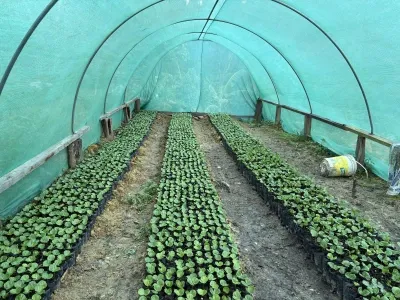
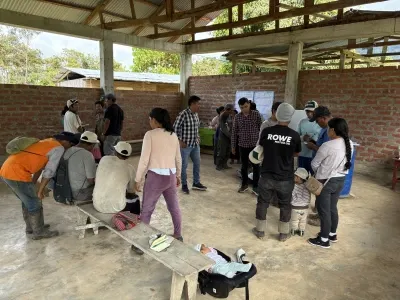
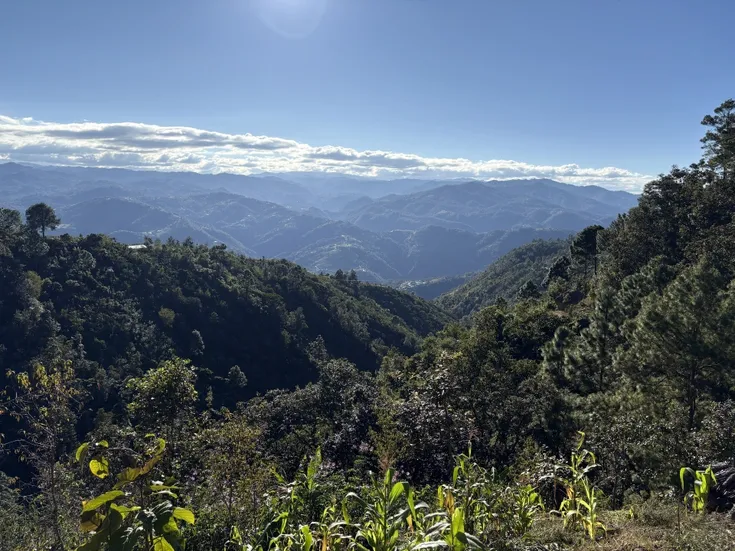
What fascinated you most about Peru?
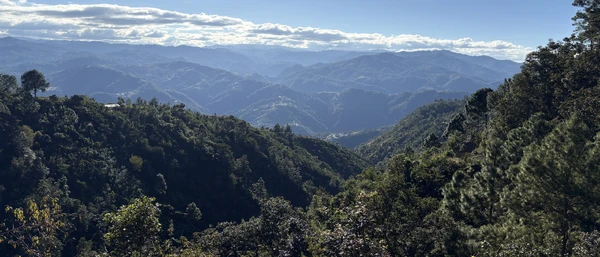
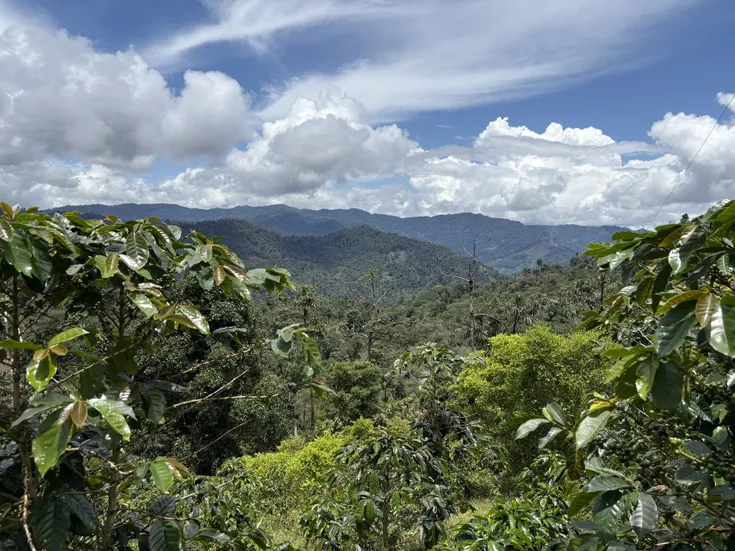
Junín is part of Peru's tropical rainforest. Farming is largely carried out using agroforestry methods. As a result, the entire region is very green and has a much higher level of biodiversity than we are used to seeing in German agriculture. Junín is also very mountainous and the roads are often in poor condition. Getting from the nearest town to the
farms higher up involves long journeys. The farmers here are often only loosely organised among themselves and there are few communes or associations of communities. It is precisely these people that we want to reach with our coffee programme and offer them the support they have lacked in recent years.
‘The Tchibo coffee programme focuses on providing farmers with the knowledge they need to increase the productivity and quality of their coffee plants. This empowers them to increase their income and improve their living conditions themselves.’
Dorian Goraj from the CR-Team
The Tchibo coffee program. Makes a difference.
Our Tchibo coffee program | Briefly summarized:
As a family business, it is natural for us to take responsibility. We are gradually working to achieve this with our coffee program in many coffee-growing regions – for better living and working conditions and more environmental protection:
- Supporting people and nature through sustainability projects at the source - independent of external seals
- Problem solving together with the farmers and with strong local partners
- Verification of progress through independent analysis of “Enveritas” green coffee supply chains