Will there still be coffee tomorrow?
If there aren’t enough chairs at an event to accommodate the expected number of guests, it’s usually a pretty good sign – namely, that the event is a resounding success. That’s exactly how it was at the Tchibo KLARTEXT dialogue event last Tuesday, 14 April 2026: even before the official start, there was a palpable sense of anticipation in the air. No wonder, as the event was all about the future of our favourite drink. Under the title “Will there still be coffee tomorrow?”, stakeholders from politics, business, civil society, academia, consumer protection and the media came together to discuss precisely this question. Just like coffee, cocoa is also threatened by factors such as climate change and rising raw material prices: that is why our colleagues had also invited the CEO of Ritter Sport, Andreas Ronken.
We interns – Luisa, Konrad and Marta – were given the opportunity to support our colleagues from the Corporate Responsibility and Corporate Communications departments at the event. Not least because the topic is close to our hearts: what would we do without chocolate, let alone coffee?!
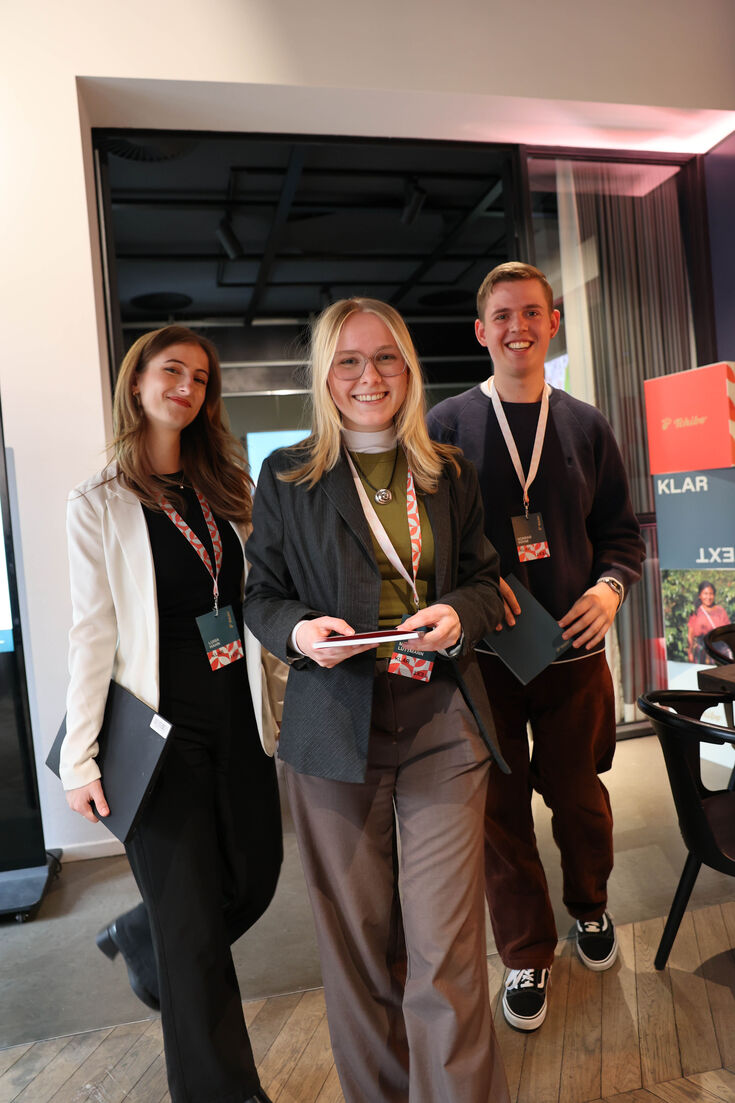
At 2.15 pm sharp, the doors of Data Space, a Berlin event venue, opened to welcome around 100 guests. Lively conversations got underway right from the start, accompanied by speciality coffees and macarons. Once a gong had signalled the official start of the event and every seat was taken, the proceedings began.
Pablo von Waldenfels, Director of Corporate Responsibility at Tchibo, welcomed the guests, gave an initial overview of the afternoon’s programme and then handed over to innovation and transformation expert Karel J. Golta. In his keynote speech, ‘The Power of the Unforeseen’, he made it clear that innovation rarely follows a straight path. Progress requires openness, collaboration and the ability to remain capable of acting even under uncertain conditions. Solutions are not created for people, but with them. And to bring about change, the status quo must be questioned – this applies to all companies, sectors and products. Including coffee and cocoa.
The subsequent panel discussion was intended to focus on securing the long-term future of these very two products. After all, it cannot be taken for granted that coffee and cocoa will still be around in 20 years’ time. That is why action must be taken!
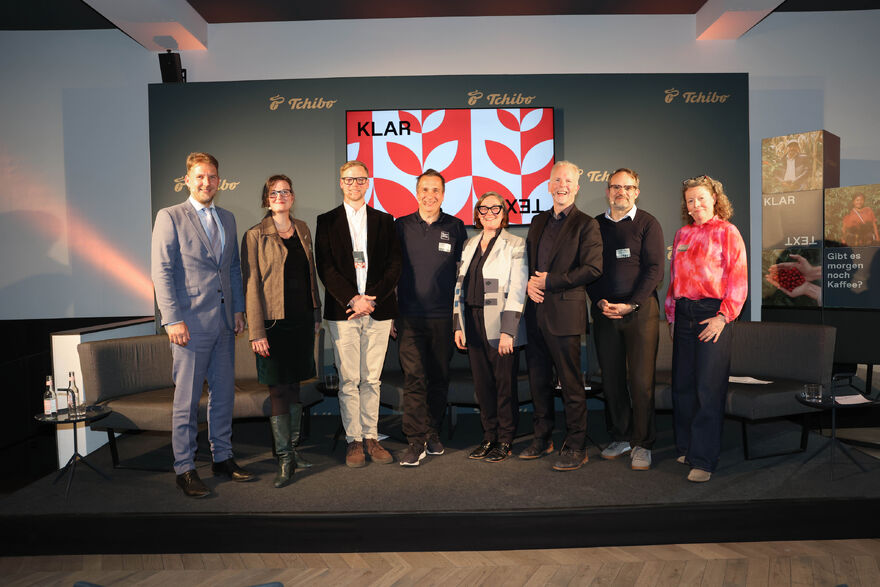
The discussion featured Pablo von Waldenfels and Andreas Ronken, CEO of Alfred Ritter, as well as Dr Olaf Deutschbein, Head of the UNIDO Berlin Office, Melanie Rutten-Sülz from Solidaridad Deutschland e.V. and Markus Kamrad, Director of the Berlin Consumer Advice Centre. Moderator Katja Weber ensured that all participants were able to contribute their perspectives. The discussion centred on the realisation that the challenges along the coffee and cocoa supply chains are multifaceted. Climate change, volatile global markets, social inequalities in the countries of origin and rising commodity prices are putting the sector under increasing pressure.
The central issue is the situation of farmers in the countries of origin. It was repeatedly emphasised that investment is needed in knowledge, productivity, financing and more resilient farming methods. However, it was equally clear that a sound economic foundation enabling a living income is crucial. Only if coffee farmers can make a living from their work will there be scope for education, healthcare and long-term development.


The report also clearly outlined the responsibilities of businesses. Companies must invest in the sustainability of their supply chains and fulfil their responsibilities. At the same time, it was emphasised that they cannot address structural shortcomings in the countries of origin on their own. A reliable political framework and local government accountability remain essential.
This is where the latest developments at Tchibo come into play. Two years after the launch of the ‘Coffee2Stay’ programme, Tchibo is now working with around 22,000 coffee farmers in nine countries of origin. The focus is on measurable improvements on the ground – from income security and climate-resilient farming methods to strengthening economic stability on the farms. Currently, around 27 per cent of green coffee comes from responsible sourcing; by the end of 2026, this figure is set to rise to 40 per cent, and by 2027, it will be 100 per cent. Our stated goal is that, by the end of next year, ALL Tchibo coffees will be sourced sustainably.
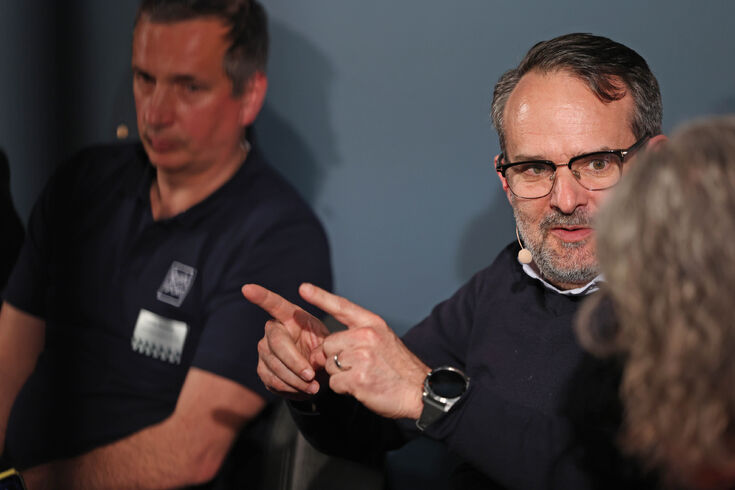
There was also intense discussion about the role of labels, standards and transparency. On the one hand, recognised and independently audited sustainability standards play an important role in providing guidance. On the other hand, it became clear that certification in the countries of origin is not sufficient on its own to make all farms more economically viable and sustainable.
From a consumer protection perspective, there was also discussion on how to convey the concept of ‘responsibility’ in a credible way. Consumers often do not understand why they should pay more – after all, not every expensive product is necessarily sustainable. There remains a tension between the desire for affordable products and the need to invest more heavily in the countries of origin, a tension that cannot be easily resolved.
Pablo von Waldenfels emphasised that responsibility must not be shifted onto farmers. Rather, the focus should be on investing in the economic viability of farms and thereby creating opportunities. At the same time, it was noted that whilst sustainability is not always the decisive factor for consumers when making a purchase, it plays an important role in building trust and shaping brand perception.
To conclude, Vern Long, CEO of World Coffee Research (WCR), turned his attention to long-term developments in the coffee sector. WCR is a non-profit research organisation focused on the future of coffee plants. Long urged everyone to remain optimistic despite growing challenges, to drive innovation forward more vigorously, and to consistently place farmers at the heart of all efforts. Particularly in light of the climate crisis and ongoing uncertainties, he argued, there is a need for greater cooperation, increased investment, and the determination to support developments over the long term.
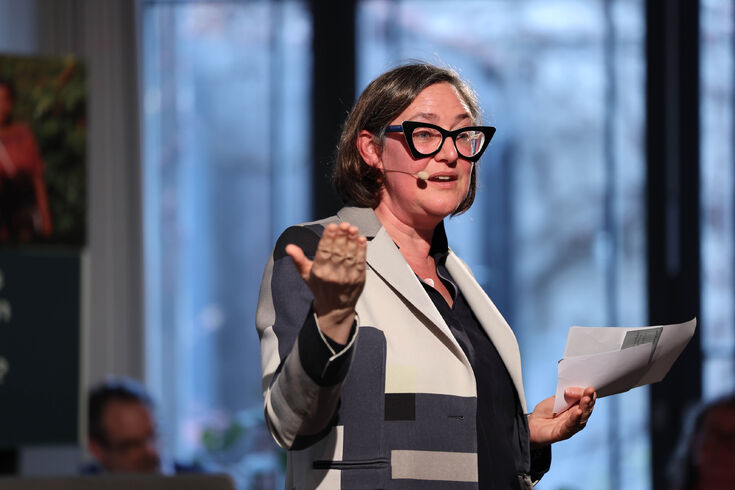
So, will there still be coffee tomorrow? The event made it clear that the question cannot be answered simply with a yes or a no. What is certain, however, is that the future of coffee and cocoa requires joint action – from businesses, politicians, civil society, the scientific community and consumers. KLARTEXT brought together some fascinating perspectives on this and demonstrated just how important it is to continue the dialogue. Thank you for the opportunity to take part.