Behind the (Repair) Scenes
Tchibo products are worth repairing. To mark Repair Day on October 17, 2026, we take a look behind the scenes.
On the 17th of October is International Repair Day. And at Tchibo, we love repairing things. Perhaps you’ve already heard of the "Right to Repair"? This right, which came into effect at the end of July, empowers consumers in Germany and the EU to help reduce waste and make products more durable. So far, it applies primarily to the electronics sector (aiming to reduce e-waste). However, we believe that repair is important for all products! That is why, for many years, we at Tchibo have been repairing items such as furniture, lighting, and coffee machines. We are convinced that Tchibo products are worth repairing. Of course, we don’t carry out all these repairs ourselves. Instead, we work with various partners. Let’s take a look at the different service providers and go behind the scenes for this year’s Repair Day: What exactly do we repair? How do we do it? And where?
Textiles
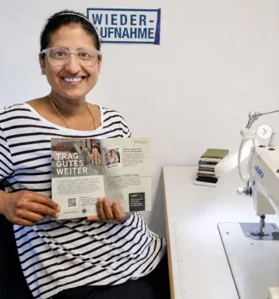
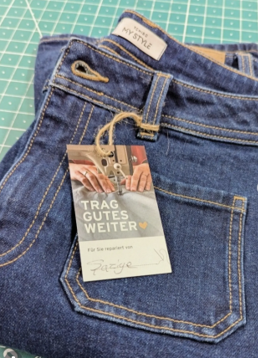
Since June 2026, we have been offering textile repair services in partnership with Repair Rebels and Bridge&Tunnel. Customers can select and book professional repairs for their clothing online, send the items in via DHL, and receive them back fully repaired. This convenient, fully digital process makes repair services accessible to a wide customer base, eliminating the need to visit a local tailor, who might not be available nearby. Repair Rebels provides the digital platform, while the actual repair work is carried out by Bridge&Tunnel in the Wilhelmsburg district of Hamburg. Bridge&Tunnel employs socially disadvantaged women and refugees who, working as seamstresses, handle the professional repairs and the shipping of the garments.
Fully automatic coffee machines, furniture, lighting, etc.
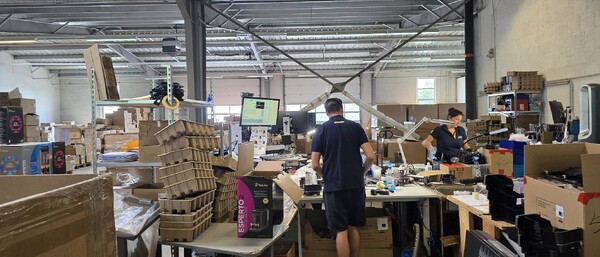
Changing locations: We are moving from Hamburg-Wilhelmsburg to Föhren, near Trier. This is home to one of our Tchibo repair centers – specifically, the ERC (Euro Repair Center). Here, we meet Michael and Tim, who show us the production process. Also on site are Karo, Isabel, and Klara from the CR team. The three of them are responsible for project management for "Tchibo Refurbished," a service we have been offering for our fully automatic coffee machines since June 2025. After all, the refurbished program is also about repair – specifically, testing and reconditioning used appliances. This complete overhaul also takes place right here at the ERC!
This photo gallery shows some impressions:
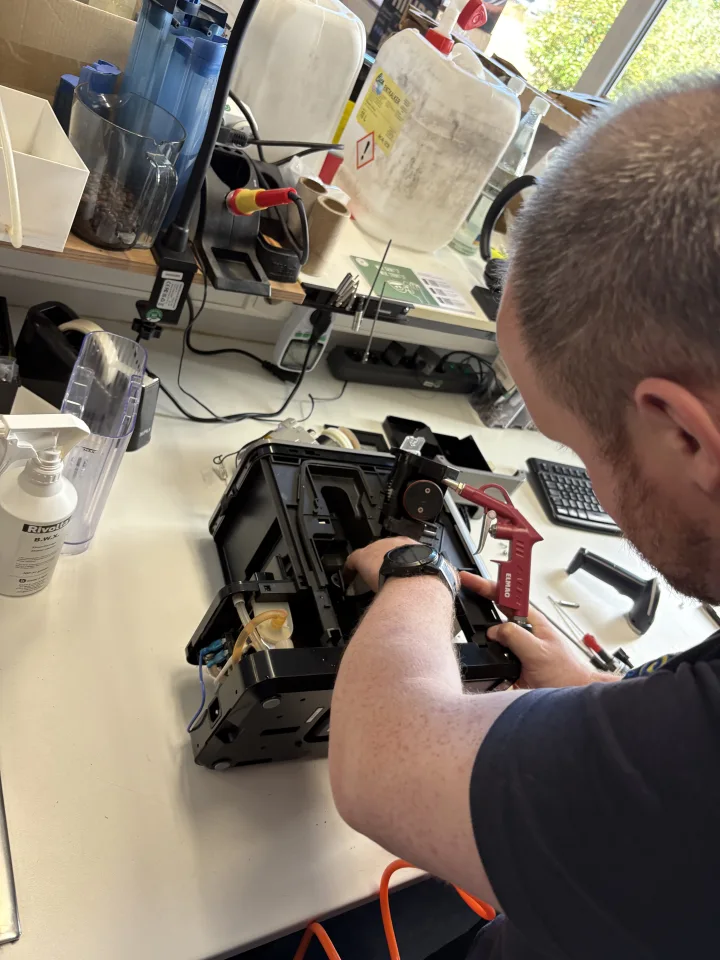
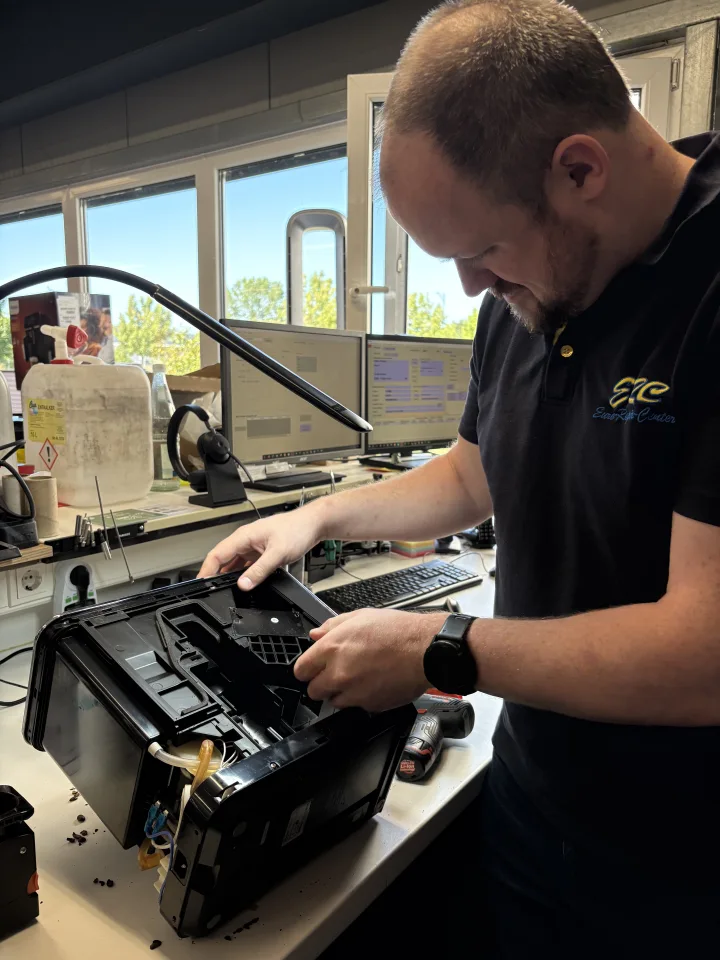
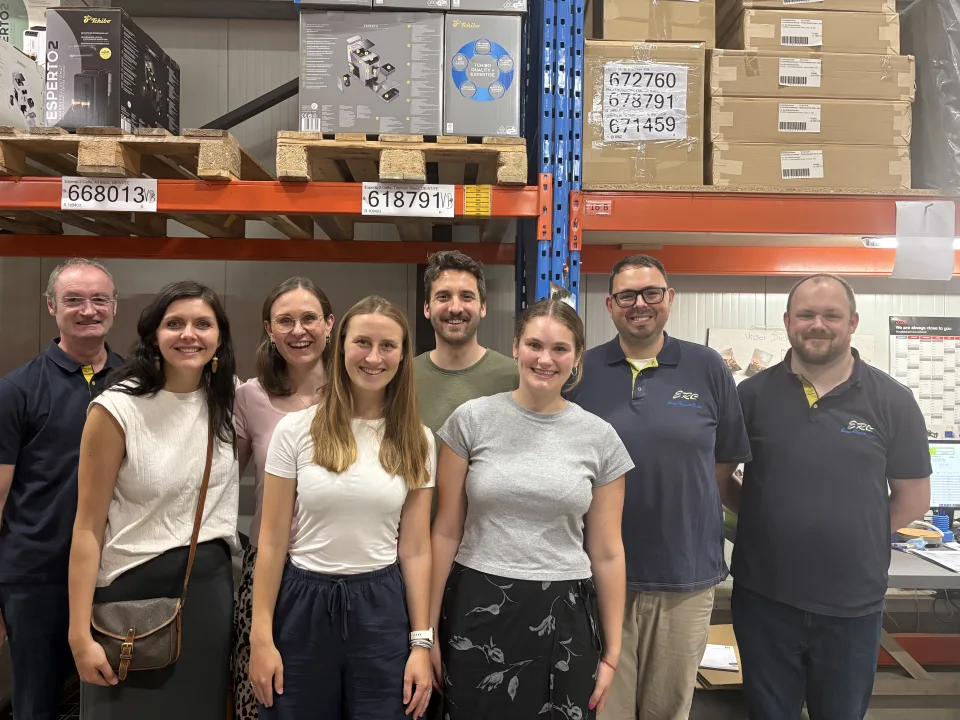
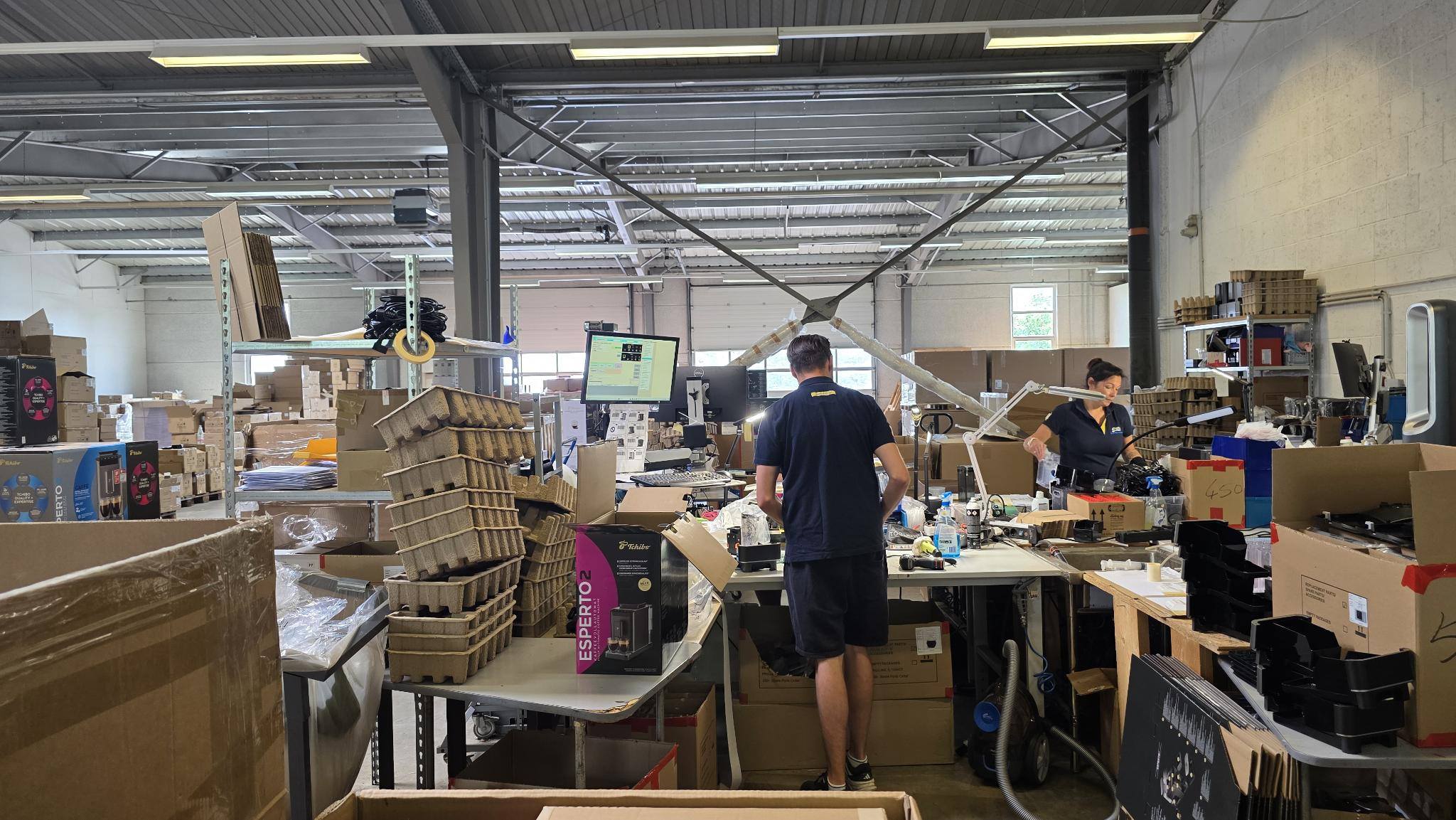
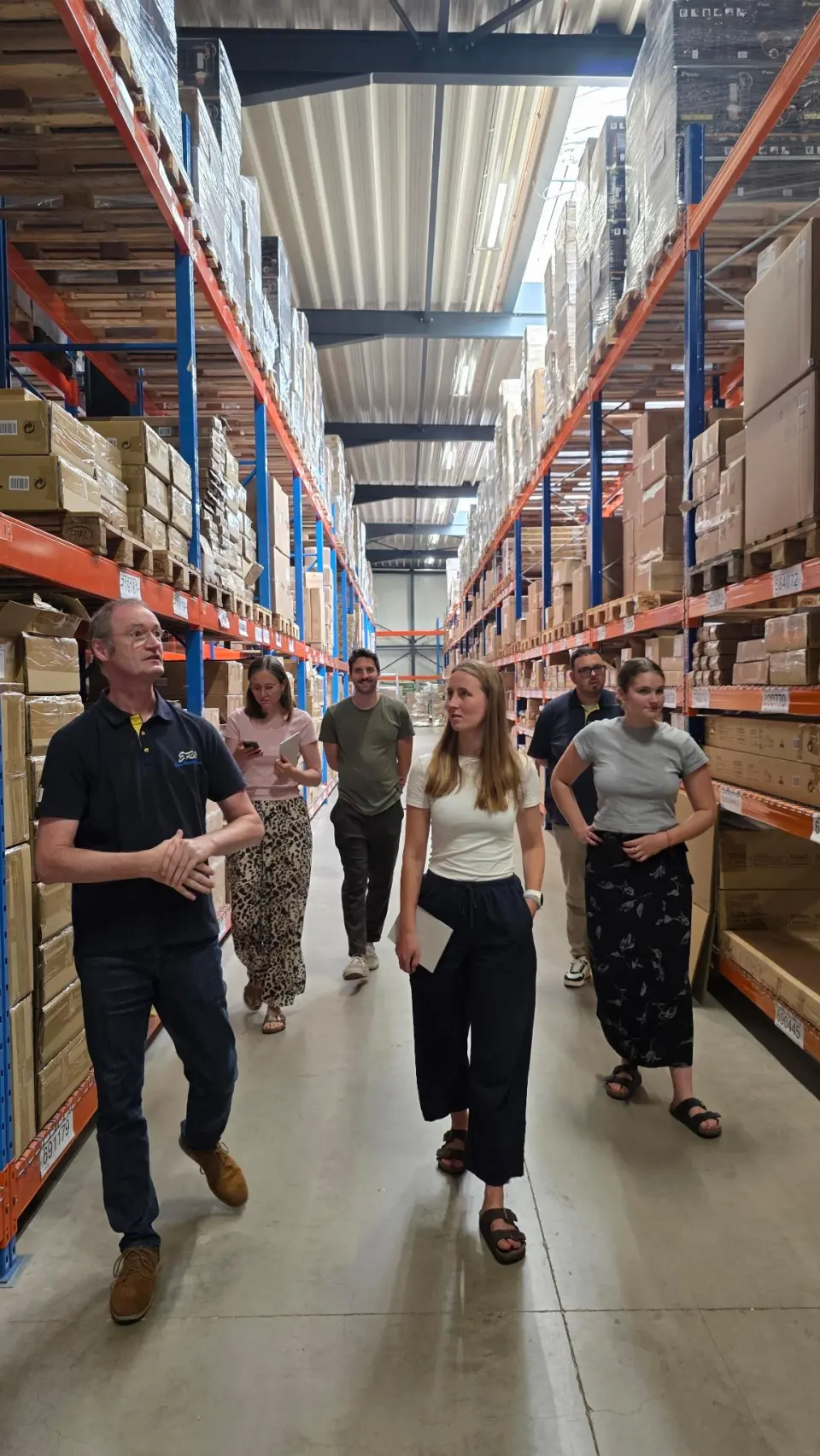
But a visit to the ERC reveals something else right away: There is even more that is repaired here. In addition to fully automatic coffee machines (including those for our Refurbished portfolio), the facility handles repairs and spare parts for many other Tchibo products – such as Cafissimo machines, milk frothers, and furniture, as well as cordless vacuum cleaners and solar lights. For Michael and Tim, one particularly memorable repair project from recent years stands out: the inflatable Santa Claus! Even that one was repaired here!
IT and Hardware Equipment
Last relocation for today: From Föhren we head to Düren (near Aachen), which is home to our social partner, afb (social & green IT). This is where our used Tchibo IT equipment is repaired. Our Tchibo laptops and smartphones have an average service life of five years, after which they undergo thorough refurbishment: data is wiped, the technology is tested, and the devices return to the market as "refurbished" models.
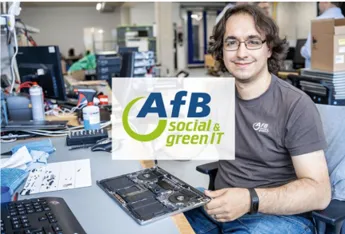
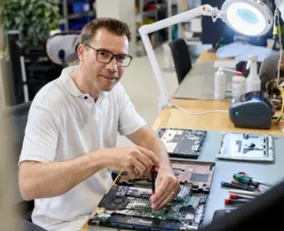
afb is Europe’s largest non-profit IT company; with a reuse rate of 70%, it ensures that devices re-enter the market in an environmentally friendly way. By early 2026, 7,700 devices had been handed in. This process also creates jobs for people with disabilities. The company employs around 700 people across Europe, approximately half of whom have severe disabilities.
So, the bottom line is: Tchibo is already doing quite a bit of repair work! And yet, there is surely still room to do even more. Perhaps this serves as a reminder to ourselves to consciously ask the question next time: "Throw it away? Or repair it?" – whether it involves textiles, electronics, or other products.