
#147: Coffee Facts on the Go – From Cherry to Cup
“Washed,” “Natural,” or “Honey”—these terms can be found on almost every coffee package, but for some shoppers, they remain a mystery at first. Yet they describe a crucial step in the journey of green coffee: processing after the harvest. Before coffee can be roasted, ground, and brewed, it must be processed and dried. The method used can significantly influence the flavor in the cup. In the new episode of “5 Cups a Day,” coffee sommelier Indre explains what’s behind the different processing methods—and why it’s worth taking a look at the back of the coffee package.
What does “coffee processing” actually mean?
The coffee beans, which are essential to our enjoyment of coffee, grow inside red coffee cherries. Before they can be brewed, the green coffee beans must first be separated from the pulp and other layers and then dried. There are various methods for doing this. Among the best-known methods are the washed process, the natural or dry process, and the honey process. These methods differ primarily in how much pulp remains on the bean, how fermentation takes place, and how the coffee cherries are subsequently dried. At first, this may sound like a technical detail. In fact, however, the processing method has a major influence on the character of the coffee. This is because, during the process, sugar and fruit flavors from the pulp can permeate the bean.
“The processing method is a crucial factor in determining how the coffee will taste in the cup.”
– Indre Berendes
Washed: Clean and Controlled Processing
In the washed processing method, the coffee beans are first separated from the coffee cherry. Afterward, they are not simply left to their own devices: The beans ferment in water for a specific period of time. Depending on the country and weather conditions, this fermentation lasts about 12 to 48 hours. During this process, microorganisms in the water break down the sugar layer—also known as mucilage—surrounding the bean. After fermentation, the beans are thoroughly rinsed with water. The goal is to ensure that no mucilage residue remains on them. Only then are they laid out outdoors to dry. The washed process is thus a relatively controlled process. The beans are carefully cleaned before they can dry.
Natural: When the coffee cherry is left completely intact...
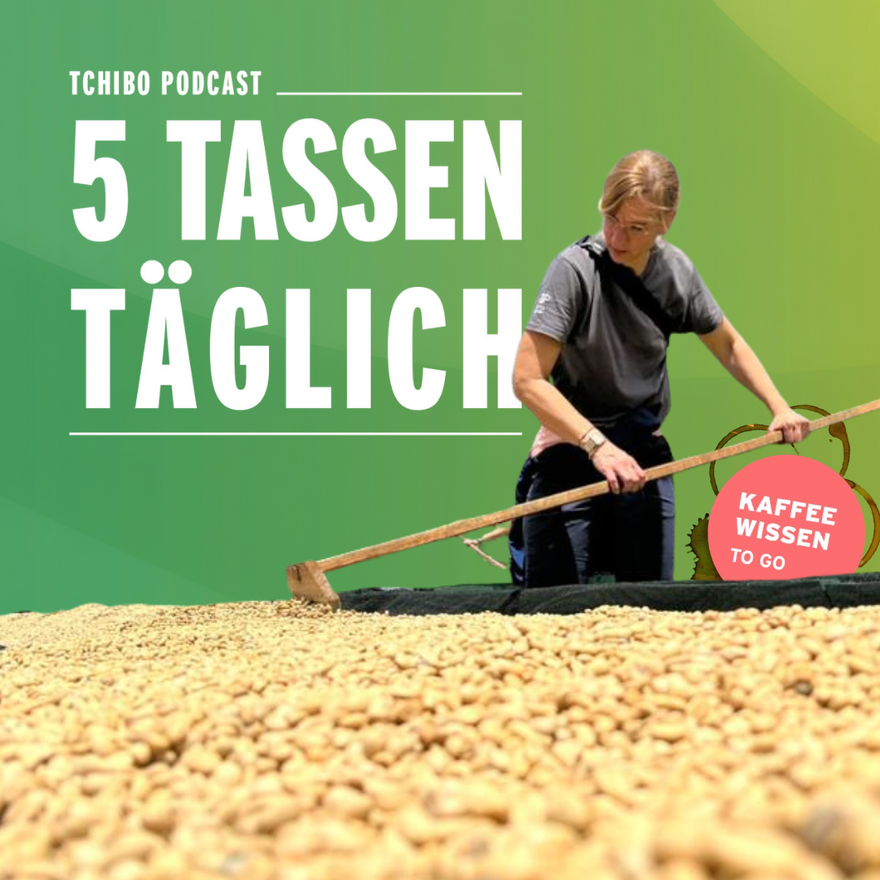
The cover of the latest episode of the podcast “5 Cups a Day” features coffee sommelier Indre Berendes standing next to a drying bed—one of the key elements of the “natural” processing method. This is considered the oldest and most traditional processing method. After harvest, the coffee cherries are not pulped. The beans thus remain completely enclosed within the fruit and are spread out in the sun on drying beds along with the intact coffee cherries. They remain there for several weeks and are checked regularly. During this time, the fruit dries slowly while the beans inside the coffee cherries ferment. Sugar and fruit flavors from the pulp gradually seep into the beans. What sounds straightforward, however, involves a great deal of work for the farmers. The coffee cherries must be turned regularly so that they dry evenly and do not remain too moist. This is because if too much moisture accumulates in the fruit, mold can develop. And it is precisely this activity that Indre is shown doing in the cover photo.
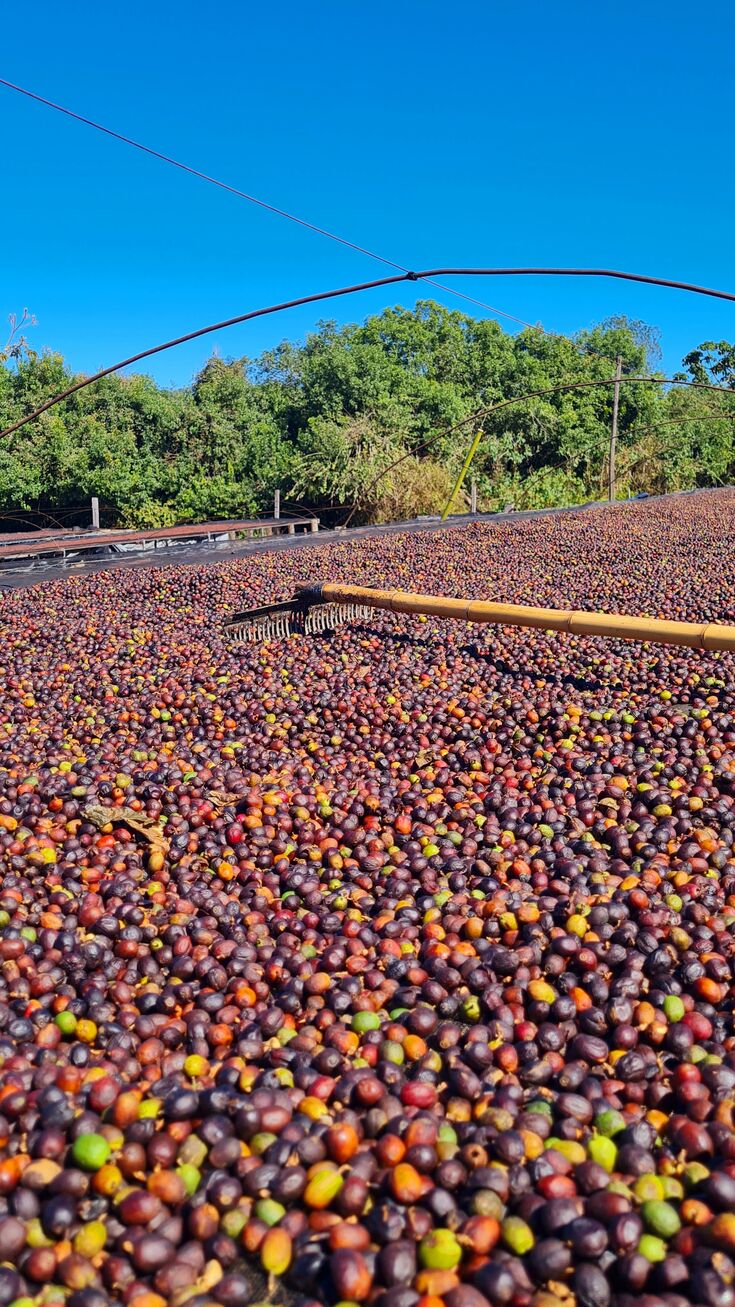
“Natural processing sounds simple at first, but it's a very delicate process for the farmers. The cherries have to be turned constantly and protected from the rain.”
– Indre Berendes
Small Terms, Big Differences
In addition to “washed” and “natural,” the term “honey” is also frequently found on coffee packaging. Although the term sounds like honey, it does not refer to the addition of honey to the coffee. In the new episode of our podcast, Indre explains not only what “honey” means, but also how different processing methods influence the flavor. So after listening, it’s worth taking a closer look at your coffee packaging—sometimes the processing terms are listed there.
“The processing method has a significant impact on the taste of our favorite beverage. However, to find out how your favorite coffee was processed, you often need to take a closer look. That’s because the terms describing the processing method aren’t usually listed right on the front of the package, but are often tucked away in the description or product details.”
– Indre Berendes
So grab the package of your favorite coffee, look for the processing method, and find out throughout this episode exactly what it means and how it affects the flavor. It’s all on “5 Cups a Day.”