Mission: Saving coffee
"what the future needs“
Our magazine series focuses on societal, sustainable, and socially relevant topics designed to inspire and provoke thought. The aim is to explore current sustainability issues critically and sincerely with internal and external experts.
Today’s Focus:
Mission: Saving Coffee – How researchers are developing the coffee of the future

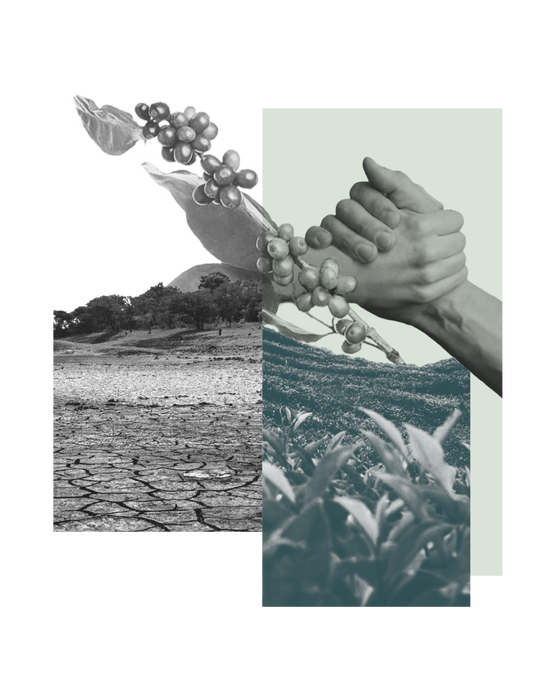
Whilst climate change threatens traditional growing regions, researchers are working on solutions that sounded like science fiction just a few years ago. Can science save the coffee plant? What opportunities does it open up for smallholder farmers? And what kinds of scepticism and criticism are researchers facing?
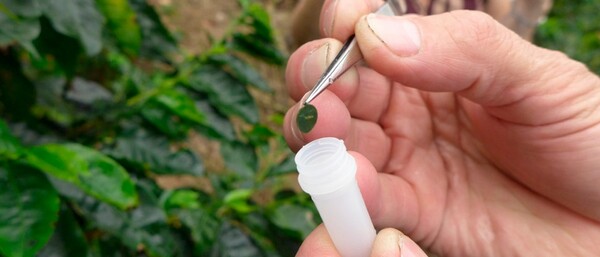
Costa Rica, coffee plantation: Leaf samples are collected with tweezers, placed in test tubes and prepared for DNA analysis.
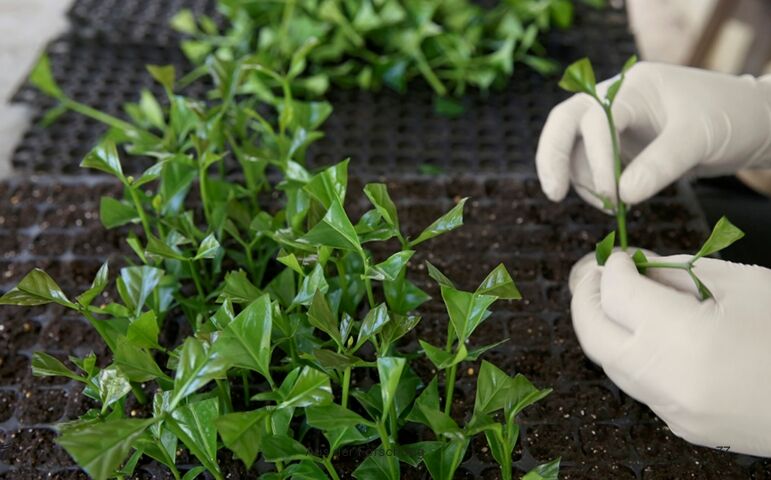
Nicaragua, research laboratory: Small, green seedlings in transparent plastic containers, along side seeds in round Petri dishes. Researchers are investigating how coffee varieties react to different environments – heat, drought, disease.
Hamburg, roastery: The aroma of coffee fills the air. Dozens of cups of freshly brewed coffee stand on large tables. Tasting. Flavour evaluation.
Coffee plantation, agricultural research facility and roastery: worlds that could hardly be more differ ent. And a collaboration that has long been standard practice in other industries but still seems unfamiliar to the traditional coffee world. All three sites are part of a complex, long-term research programme with one goal: to secure the future of coffee. This is what everyday life looks like for the non-profit organisation World Coffee Research (WCR), which specialises in coffee research and development and is working on developing climate resilient coffee varieties for farmers worldwide. Dr Jennifer ‘Vern’ Long is the CEO of WCR. We asked her: How exactly does this mission to save coffee work? And can it succeed?

DR. JENNIFER „VERN“ LONG
CEO AT WORLD COFFEE RESEARCH (WCR)
Dr Jennifer ‘Vern’ Long has been at the helm of the re search institute World Coffee Research since 2019. She is re sponsible for the direction of the research programmes and bridges the gap between theory and practice.

Let’s start from the beginning: the coffee market is highly competitive. Farmers want to sell their coffee. Coffee-growing countries want to export coffee to generate export revenue. The commodities trade wants to transport coffee profitably from A to B. And other players, such as coffee roasters, want to buy coffee and to compete in the retail market. Farmers therefore need secure harvests and high-yielding coffee plants – especially in difficult times when prices are low or productivity is declining due to pests, diseases or climate conditions. This is where WCR’s work comes in. Founded in 2012, the organisation has set itself the task of promoting and protecting quality coffee, whilst improving both the supply and the livelihoods of the families who produce it. WCR’s main object ive is to enhance the sustainability and resilience of coffee farming by improving access to existing high-performing coffee plants and developing new varieties. For Vern, the future of coffee looks like this: “A world where farmers have access to the best varieties and are free to choose them to achieve higher yields and productivity on their farms. This enables them to make informed investment decisions and generate the corresponding yields and profits to invest in their farms”. Being able to ‘choose freely’ is an important keyword here: there are currently only around 120 coffee varieties worldwide. In comparison, there are over 5,000 varieties of apples. Apple growers can therefore choose the variety they wish to market – and thus ensure that the chosen variety not only has a market but is also high-yielding, disease-resistant and climate-resilient. Coffee farmers, on the other hand, have significantly fewer options. How can this be? WCR has set out to change this.
Research objective: increasing the resilience of coffee plants
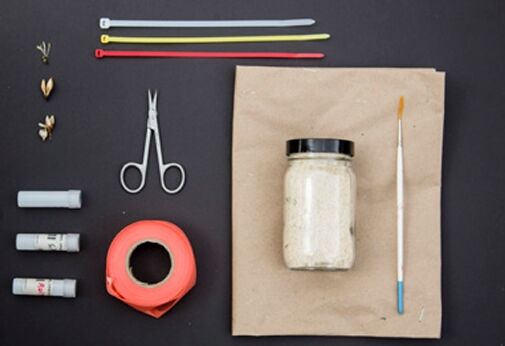
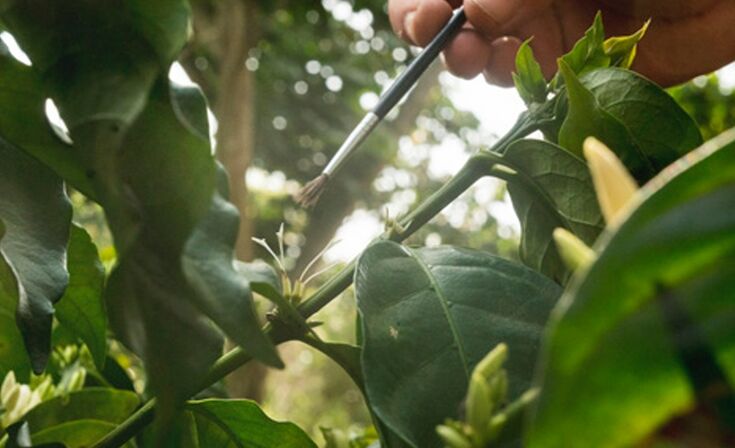
Scissors, brush, collection container: basic equipment for field research
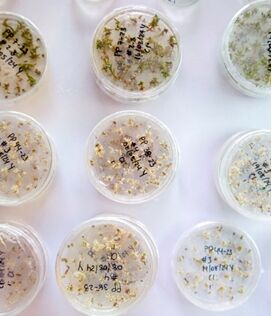
Seedlings in Petri dishes
Improving opportunities through science
Among other things, WCR is committed to the professionalisation of tree nurseries and seed systems, conducts variety trials thus modernising plant cultivation. The aim is to give farmers access to better varieties to make them more resilient and profitable in the face of risks such as climate change. To this end, WCR develops climate-resilient coffee varieties – without genetic engineering, through traditional cross-breeding methods. The aim is to keep yields stable, mitigate the effects of diseases and pests and make land use more efficient. That’s the theory, but what does it look like in practice? How do farmers react to these new varieties? The industry tends to be conservative, but for good reason, explains Vern. Farmers only adopt technologies once they recognise their benefits. If the trees are not profitable for the farmers, they will not grow them. That’s why varieties need to be developed that meet the needs of farmers. Farmers generally want high-yielding varieties that do not require pesticides. If a coffee bush is naturally resistant, it does not need to be sprayed. This is good for farmers, as they do not have to buy pesticides – and consumers also benefit from unsprayed produce.
How do the new varieties get into the fields? Traditionally, breeding a new variety takes around 30 years. WCR has reduced this timeframe to around eight years. The first selection will be available in 2028 and then be tested – first in national trials, then in all regions of origin. The first varieties from this breeding programme are due to be launched on the market in 2037
Genetics – an ethical minefield?
Should consumers be concerned about genetically modified coffee plants (GMOs)? After all, interventions in DNA repeatedly raise ethical and moral concerns – including regarding the risks and side effects associated with genetic manipulation. “There is no cause for concern”, says Vern, because traditional cross-breeding is at the heart of coffee plant research. The aim is to use advanced genetics to find the best combinations for new varieties and thus optimise traditional breeding through genetic findings. The example of blueberries shows that we can be very successful in using genetics to maintain a continuous supply of the quality we are striving for: 20 years ago, blueberries were only available in summer. They were not affordable in December and, even if you could get some, the quality was often not good. Today you can buy blueberries all year round.
“Genetics is not just about solving problems, but also about creating new opportunities.”
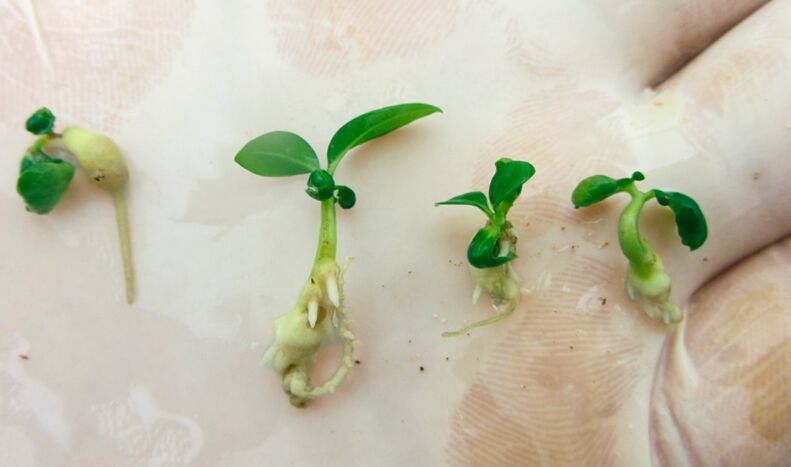
Collaboration as the key to success
Research into the future viability of coffee requires more than just time: it requires collaboration. This is one of the core values of World Coffee Research, which collaborates with leading institutions in producing countries and around the world to drive their research. “It’s a collaborative process to develop and launch varieties”, says Vern. Groups of farmers, traders and nursery operators, as well as the governments of the various coffee-growing countries are all stakeholders in WCR. Vern puts it this way: “Each company initially pursued its own goals and worked solely for itself. Then they joined forces. Bilateral relationships have developed into a relationship of trust. Collaborative science can be very effective!”. WCR is therefore not just a coffee company or a retailer, but an entire association. Its members include over 200 companies from 30 countries worldwide, including Starbucks, Dunkin’, Lavaz za, JDE/Jacobs – and Tchibo too.
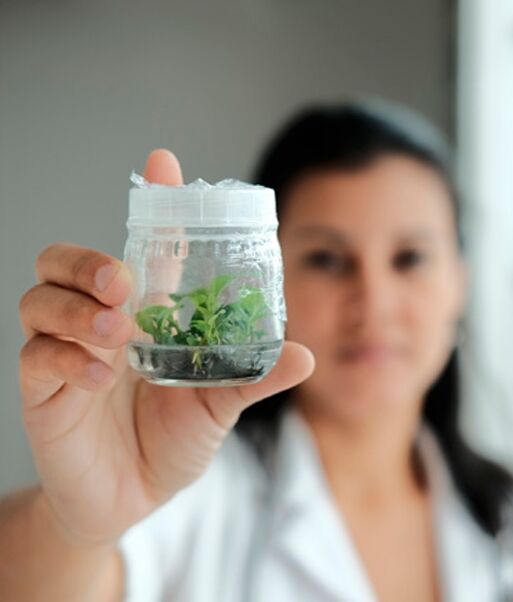
↑ Coffee seedlings are grown in transparent plastic containers
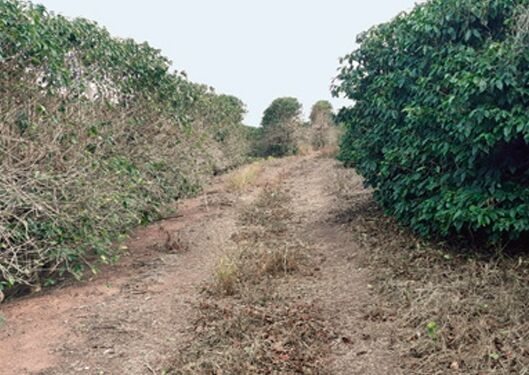
Back to the coffee plantation – this time in Brazil The photo at the bottom left shows the impact of coffee rust, a fungal disease, on different coffee plants. The plants on the left of the path are not resistant to rust infestation. The plants on the right are resistant. Looking at this field makes it obvious: the future of coffee is not just possible, it has already begun in agriculture.
↗ New coffee varieties should be high-yielding, disease-resistant and climate-resilient
→ One of WCR’s objectives: to professionalise nurseries and seed systems