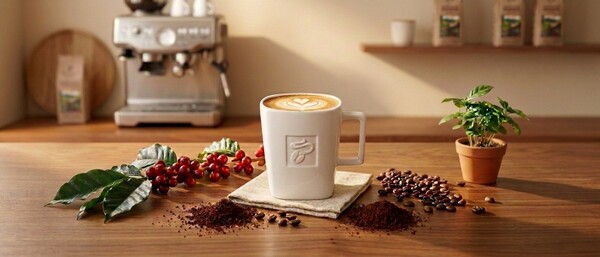
From coffee cherry to ground coffee
Coffee byproducts can become fertilizer, biochar and new products throughout the supply chain. Farmers in Honduras, Brazil, Vietnam, Colombia and Tanzania, along with Tchibo and other partners, are exploring these circular approaches. At home, dried coffee grounds can also be used for plants, compost and household tasks if stored and composted properly.
Every year, millions of tonnes of coffee are processed worldwide – but what actually happens to all the leftovers? Coffee is so much more than just what ends up in your cup. Coffee is a favourite drink and a moment of indulgence. But coffee can do so much more! So today, let’s take a look at what’s left over from coffee: the so-called coffee leftovers.
Waste = raw material?
From the coffee cherry on the plantation to enjoying a cup of coffee at home: waste products are generated throughout the entire coffee supply chain, and most of them are anything but worthless! On the contrary: some of these waste products can actually serve as new raw materials! Sometimes this requires a bold partner and an innovative idea – sometimes all you need is a baking tray. Because the uses for these by-products are just as varied as the flavour of the coffee itself.
So the question isn’t: ‘How do we get rid of the coffee grounds?’
The question is: ‘What else is in them?’
Back to the beginning: the coffee plant
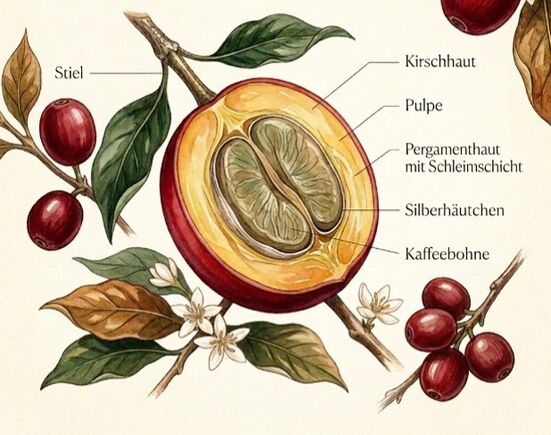
Before a coffee bean makes its way to the roastery, it is inside a fruit – the coffee cherry. What some people don’t realise is that the bean is actually just the seed. But the layers surrounding it can be put to further use. Many coffee farmers around the globe are already demonstrating how the other parts of the coffee plant can be utilised.
The coffee cherry
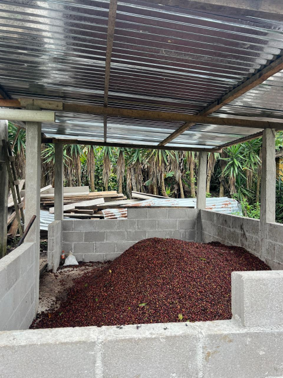
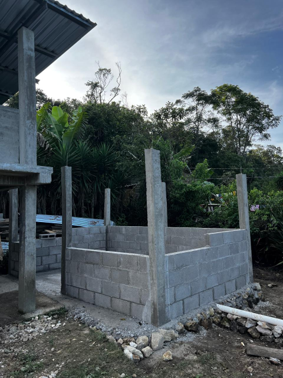
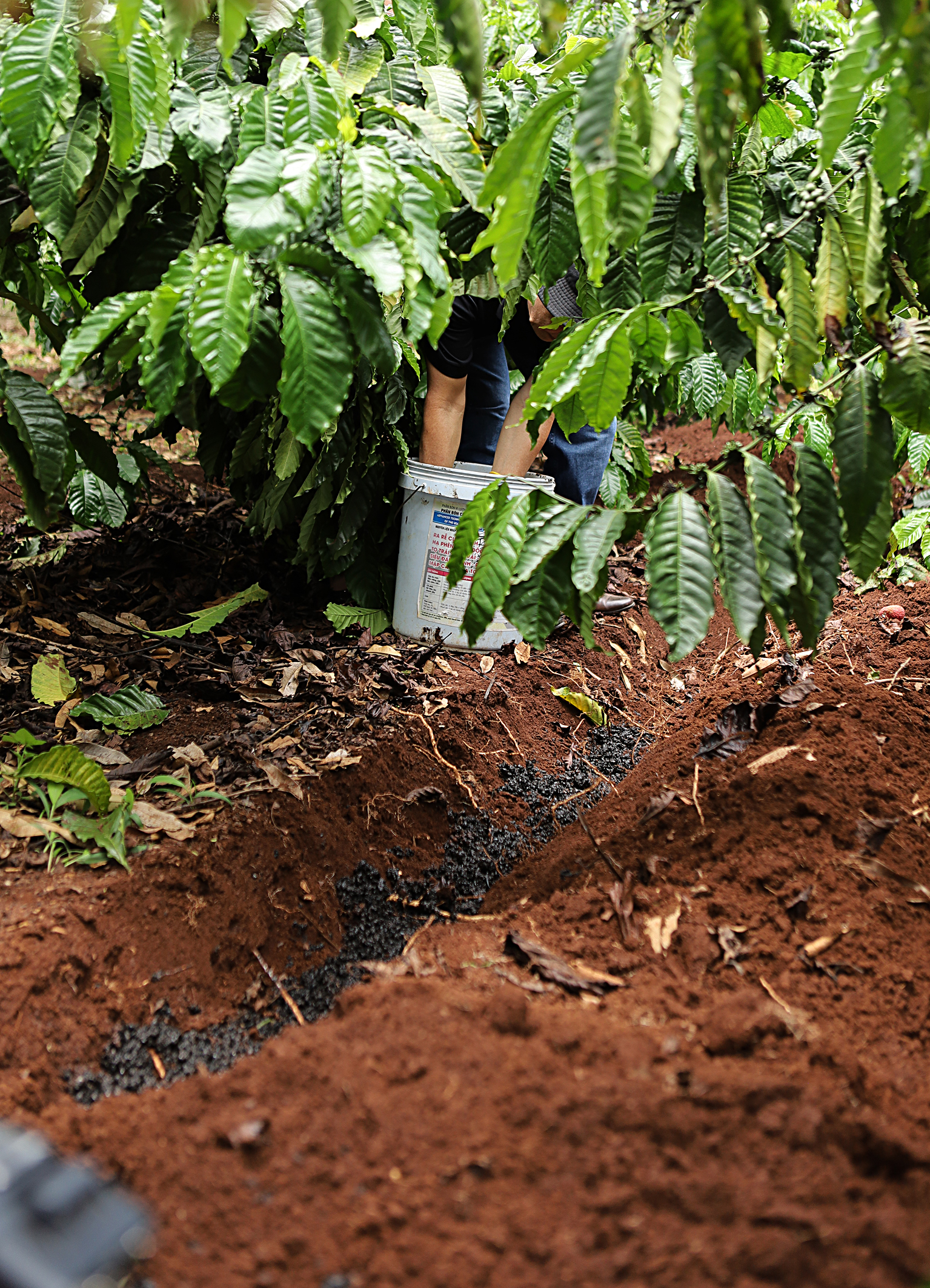
Let’s start with the flesh of the coffee cherry, known as pulp or cascara. It is separated from the bean during processing. Waste? There’s another way: once dried, it can be used to make tea or applied directly as compost and fertiliser on coffee plantations. In Honduras, for example, support is currently being provided for the construction of 200 so-called pulp handling booths – machines that turn dried coffee pulp into natural fertiliser, which farmers can use on their fields or sell. In this way, waste becomes a source of income for the farmers!
The wood of the coffee trees
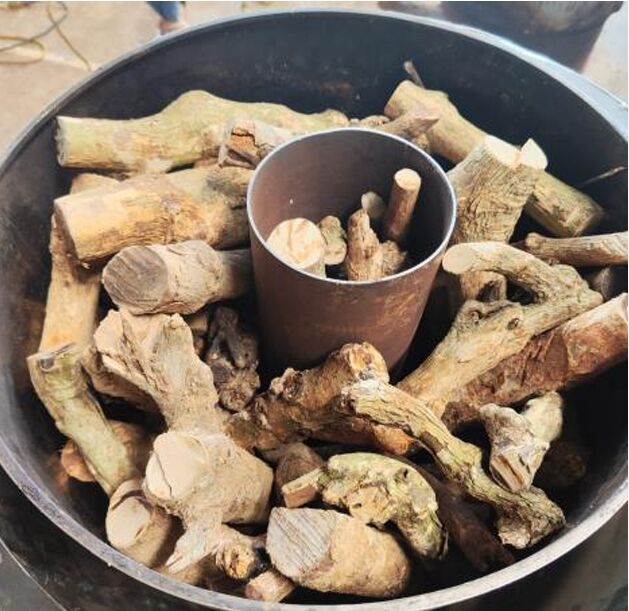
Let’s stay with the coffee plant for a moment and take a look at the wood from coffee trees. This is produced when the trees are pruned or felled – for example, to renew the crop – and is also increasingly being reused.
In some places, small everyday items such as tea light holders or key rings are made from old coffee wood.
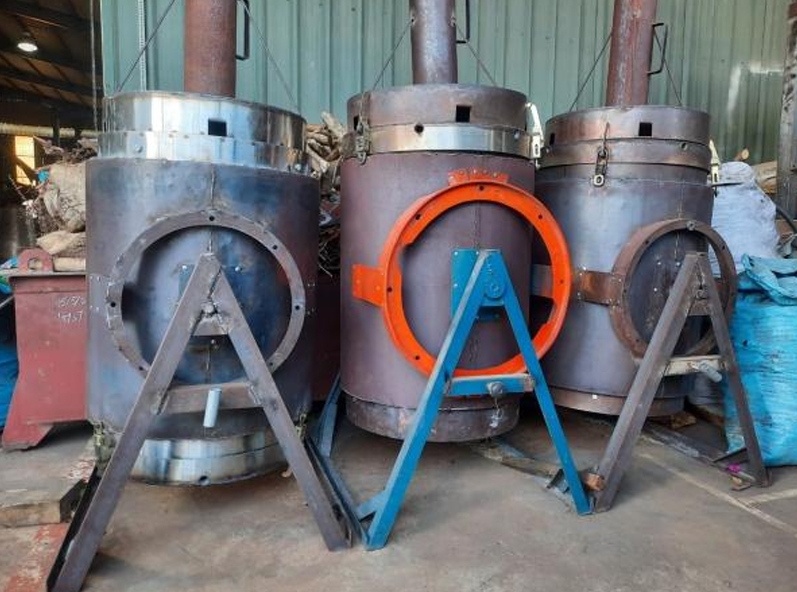
In Brazil, Vietnam and Colombia, the wood is processed together with coffee husks in pyrolysis furnaces to produce valuable biochar – with promising results: In future, biochar could help to reduce the use of synthetic fertilisers, which would have a positive impact on soil, the environment and farmers’ costs. To harness and promote this potential, we at Tchibo have even set up a biochar community: we regularly bring together various partners working on this topic to discuss approaches and encourage mutual learning.
“We have realised that biochar is not an issue that can be tackled alone. That is why, three years ago, we founded a community united by one thing: the conviction that we can learn from one another. Each company conducts its own trials, but the lessons we learn together from these experiences empower us all to take bolder action.”
- Fanny Börner
By the way: At the Machare Coffee Estate in Tanzania, too, they make their own compost using both coffee cherries and coffee wood. In the farm diary, Bente from the Machare Coffee Estate shows how this works and, amongst other things, how coffee waste is turned into compost step by step – which in turn becomes natural fertiliser that is used directly on the coffee plantations. So this is another great example of just how little is actually ‘waste’ when you take a closer look.
What does the circular economy actually look like in practice – not in theory, but right there on the farm? Bente from the Machare Coffee Estate in Tanzania gives us a real insight: In her farm diary, she shows how coffee waste is turned, step by step, into the estate’s own compost – which in turn becomes natural fertiliser used directly on the coffee plantations. A lovely example of just how little is actually ‘waste’ when you look closely.
During production and after consumption: how leftover roasted coffee and coffee grounds are turned into new products
From the coffee’s origins, we now move on to production. Here, too, we’re already making the most of opportunities to reuse the coffee waste produced – for example, by passing it on or even turning it into completely new products!

Husk (Silver Skin)
During roasting, a thin silver skin peels away from the bean. At Tchibo, the husks are compressed and sent to an external partner for further processing, for example as fuel.
Instant coffee
The industrial production of instant coffee also generates coffee grounds – in large quantities. The resulting coffee grounds are also reused, for example as insulation material in the automotive industry.
Time and again over the last few years, new products have also been developed using roasted coffee residues or recycled coffee grounds. Here are a few examples from the Tchibo range:
Coffee Lover Sneaker | 2025
In collaboration with VLACE, there is a vegan trainer made from coffee roasting residues from the Tchibo roastery in Hamburg – handmade in Portugal, entirely without animal leather. It was awarded the PETA Vegan Award for Fashion in 2025.
Coffee ground pellets – Circular Economy made in Austria | 2026
Coffee grounds from the Tchibo coffee bars in Austria are processed into pellets which, when mixed with water, swell to form 20 litres of nutrient-rich potting compost – peat-free, plastic-free, 100% made in Austria. Available in all 120 Tchibo branches in Austria.
Notepads & cards made from coffee paper | 2020
As part of the ‘But first Coffee’ collection, notepads and cards were produced and sold in 2020, some of which were made from coffee grounds.
Sportswear | 2020
The same collection has also produced some fantastic sportswear. It is made from recycled coffee grounds and recycled PET bottles. It is odour-resistant, breathable and quick-drying.

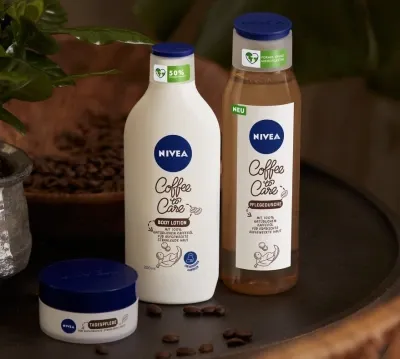
Beiersdorf has also experimented with coffee in cosmetics as part of an innovation project. The „Coffee to Care“ range by Nivea utilised coffee oil extracted from recycled coffee grounds. The product range, comprising a day cream, body lotion and shower gel, was launched as a limited edition in 2021. We covered this on our podcast “5 Tassen täglich”.
At home: Things you can make yourself using coffee grounds
So let’s leave the topic of coffee’s origins and production behind for now and take a look at things closer to home. What can we do ourselves, and how can each and every one of us make use of coffee grounds? We’ve put together a few ideas on this too, which you’ll find below.
First and foremost: always dry your coffee grounds! Spread them out in a thin layer on a baking tray and leave them to dry overnight, or bake them in the oven at 50–80°C for 15–20 minutes. If stored in an airtight container, they will keep for several weeks.
Garden & Plants: Use as a fertiliser, snail repellent or compost additive. Plants that particularly thrive in acidic soil, such as hydrangeas and blueberries, will love it!
Body & Beauty: Mixed with oil or honey as a scrub, or massaged into the scalp for shiny hair.
Household: As an odour neutraliser, scouring agent or to keep ants at bay.
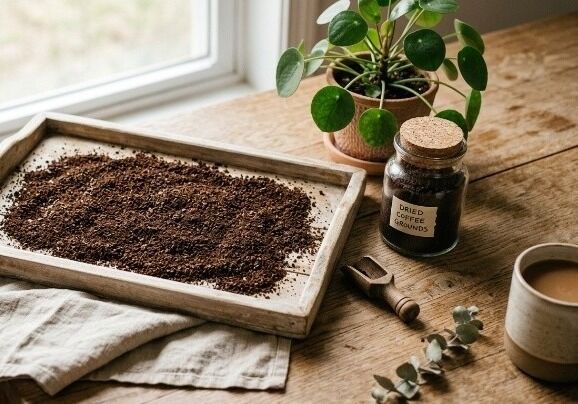
And what about compost? Yes – but do it properly! Coffee grounds compost wonderfully well if you bear a few things in mind. It’s best not to add them in thick, compact layers, but to let them dry out well and mix them with carbon-rich material such as leaves, shredded plant matter, straw or cardboard. Also, keep the compost only slightly damp and mix it through or aerate it occasionally – because in compost that’s too wet and poorly aerated, microorganisms can break down the material in an oxygen-deprived environment, releasing climate-damaging methane in the process. However, this is hardly a problem with a well-maintained home compost heap. A quick tip: if the compost smells musty or rotten, or if the material looks black and slimy, this indicates a lack of oxygen – simply loosen it up and mix in some dry, coarse material. Incidentally, small amounts of coffee grounds are not a problem in normal garden compost.
By the way: the Tchibo Coffee Report has also previously looked into how coffee grounds are used at home. You can find the answers to the question “How have you reused coffee grounds or beans in the past?” in the 2024 Coffee Report.
Our conclusion
At Tchibo, we are constantly working to create real value from our coffee waste – and time and again, new products and ideas emerge that demonstrate the potential of our waste materials. For us, this is not a one-off initiative, but an ongoing process. Because we are certain that, for coffee to have a future, concrete measures are needed today across the entire supply chain.
What does the future of coffee need?
You can find out more about sustainability at the source of coffee and throughout the supply chain in the “what the future needs” magazine. Have a read now!