#141 - Bye Matcha? Ube is the new purple trend drink?
Matcha today, purple tomorrow? If you’re active on TikTok or Instagram, you’ve probably already seen it—the bright purple ube latte. It’s even starting to appear in a few cafés in Hamburg. Eye-catching, photogenic, and somehow almost too good to be true. But behind the hype lies not an artificial color filter, but a traditional tuber from the Philippines: ube, the purple yam.
Ube brings not only color to the cup, but also an exciting story. The root has long been a staple of Filipino cuisine, where it is traditionally used primarily in desserts. Now it’s increasingly making its way into cafés and becoming a trendy drink here. In the latest episode of 5 Cups a Day, we get to the root of this new hype drink: What can the purple tuber do?
What exactly is ube?
Ube is a yam and should not be confused with sweet potatoes, even though they may look similar. Its deep purple color is completely natural and comes from anthocyanins, plant compounds that are also found in blueberries and red cabbage.
Why is everyone suddenly drinking Ube?
One reason for the boom is undoubtedly its appearance. The bold purple color draws attention and makes the drink a real social media star. But the so-called “safe adventure” principle also plays a role: Ube seems exciting and new, yet its taste remains pleasant and accessible.
In other words: Ube looks like an adventure, but doesn’t feel risky when you try it. It’s precisely this combination that seems to fit the times perfectly.
Sweet, creamy, purple: What an ube latte can do
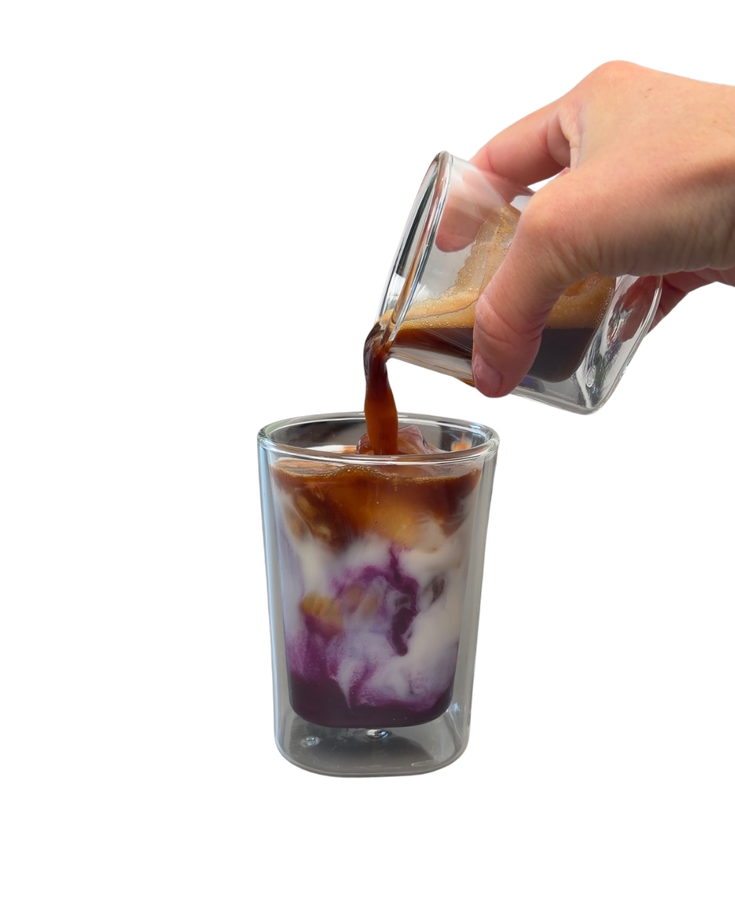
So, what does the root actually taste like? In the podcast, we try the ube latte, of course—and we’re impressed. The drink tastes creamy, sweet, and not too overpowering, with nutty and vanilla notes. It seems exotic, but tastes surprisingly familiar—that’s exactly what makes ube so exciting. So while the drink isn’t a coffee substitute in the traditional sense, it’s an interesting alternative for anyone looking for something new.
“This root vegetable can actually offer many health benefits; it contains vitamins A, C, and E, and is rich in fiber and antioxidants.” – Indre Berendes
Between Tradition and TikTok
Nevertheless, it’s worth taking a closer look at what lies behind this trend. As its popularity grows, so do critical questions—such as those regarding cultural appropriation, supply chain transparency, and fair compensation for local producers.
There is criticism from the Filipino community that large companies often overlook the cultural significance of ube and market the ingredient primarily for its beautiful color. At the same time, many are calling for greater transparency and fair conditions so that farmers in the Philippines can also benefit from the hype.
How sustainable is Ube?
But as with all foods imported from far away, the distance they travel remains an issue. Since the root must be imported from the Philippines to Europe, its carbon footprint is not exactly small.
On top of that, demand is currently growing faster than production. This can put additional pressure on small-scale producers.
“That’s probably the biggest challenge: production hasn’t kept pace with demand. This can lead to supply shortages and price volatility, and the harvest is seasonal. It’s difficult for small local farmers to meet the demand.”
– Indre Berendes
Will ube become the new matcha?
Whether ube matcha can truly dethrone the current trend remains to be seen. The same goes for the question of whether the two drinks are even direct competitors. But one thing is clear: ube definitely has potential if the trend is developed responsibly—with consideration for culture, supply chains, and local producers.
If you’d like to get some insights into the current trend drink, then tune in now to the full episode “Bye Matcha? Is Ube the New Purple Trend Drink?” from “5 Cups a Day.”