Better data for better projects
"what the future needs“
Our magazine series focuses on societal, sustainable, and socially relevant topics designed to inspire and provoke thought. The aim is to explore current sustainability issues critically and sincerely with internal and external experts.
Today’s Focus:
Enveritas – featuring an interview with founder David Browning on data-driven approaches to improving sustainability in the coffee industry.
Where does Tchibo coffee come from? How can it be traced to the farm gate? And what are the most pressing sustainability issues in the respective regions of origin? To answer these questions, Tchibo works with Enveritas, a non-profit organisation dedicated to sustainability verification. An interview with Enveritas’ founder David Browning on the organisations’ data driven approach and the future of coffee certification.
Who is Enveritas?
David Browning: We are a non-profit organisation that conducts sustainability audits for the coffee and cocoa industries 1. We work with leading coffee roasters and chocolate manufactur ers to assess and understand the sustainability is sues in their supply chains based on our standards. Coffee roasters and chocolate companies pay for these assessments, not farmers 2. The profits do not go to shareholders. Instead, we reinvest them in our own impact work, which we started in Viet nam and East Africa.
Why did you found Enveritas?
David: After working with smallholder far mers for over 20 years, I could see that traditional approaches were not achieving sufficient impact. We founded Enveritas in the belief that advances in technology meant we could radically improve approaches to poverty alleviation amongst coffee farmers.
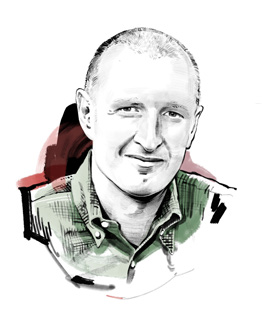
David Browning: Enveritas Founder
David Browning is the founder and CEO of Enveritas. Previously, he served as Senior Vice Pre sident of Strategic Initiatives at TechnoServe. The re, his work focused on improving the living con ditions of poor smallholder farmers in East Africa. David holds a Master of Business Administration (MBA) in Advanced Finance from the University of New South Wales and an MBA from Yale University.
How does your approach differ from standard sustainability certification schemes?
David: We started from the observation that the industry was lacking reliable data on what was happening on the ground. The coffee supply chains in the origin countries are very fragmented, and it was difficult for roasters to even know where the coffee they buy on international markets comes from. In their sustainability efforts, they often react ed to anecdotal evidence, usually a news story or an NGO report on poverty, child labour or pesticide use. But the data underlying these efforts was scarce and often unreliable. In order to engage in prob lem solving, you need to know what the issues are in any given country or region. But we did not even have good estimates on the total number of coffee producing farms. From our point of view, certification had methodological problems, extrapolating from small sample sizes meant high margins of error. We provide the roasters with better data in order to help them understand their supply chains better and direct funds to the right places.
How do you do that?
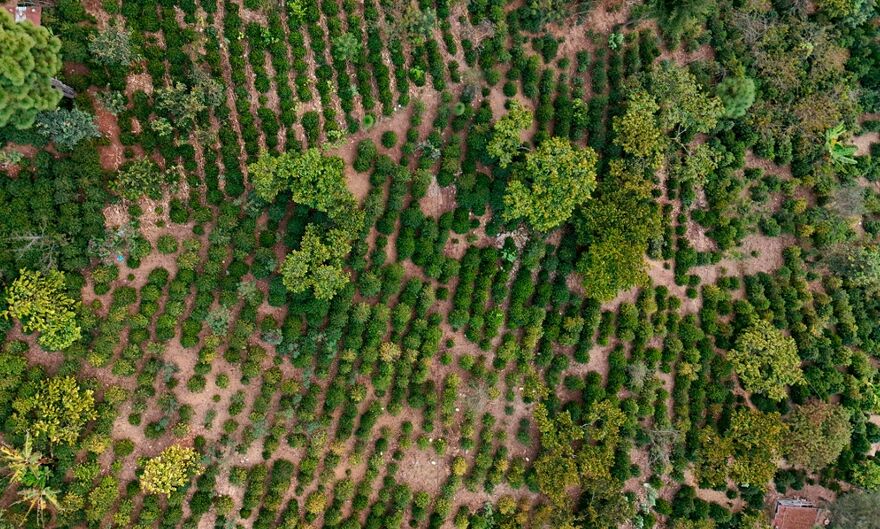
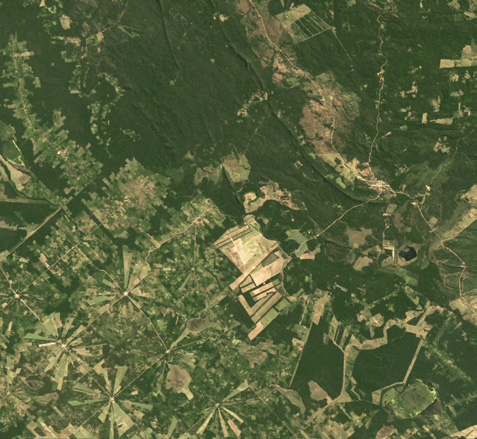
David: We have a two-pronged ap proach. First, we conduct large numbers of interviews with smallholder farmers. Common certification schemes conduct maybe 5,000 to 6,000 interviews per year. We conduct around 140,000 in person interviews per year with farmers throughout the coffee supply chain. This gives us a lot of authentic information on how coffee is being produced. Second, we use satellite imagery and machine learning in order to identify where coffee is being produced, how large the farms are and what changes can be observed, for example, with regards to deforesta tion 4. Unlike common certification, our approach is not a pass/fail system. We are trying to authentically determine under which conditions coffee is being produced. For example, our clients need to know: What is the risk of child labour in a given region? It’s not zero, but what is it exactly? Nine of ten farms or one of ten farms? Then they can divert resources more efficiently. The funds follow the data, not the publicity.
In how many countries do you operate?
David: We built it up country by country, we are in 34 countries now. We rerun the interviews every year.
How do you manage to conduct so many interviews?
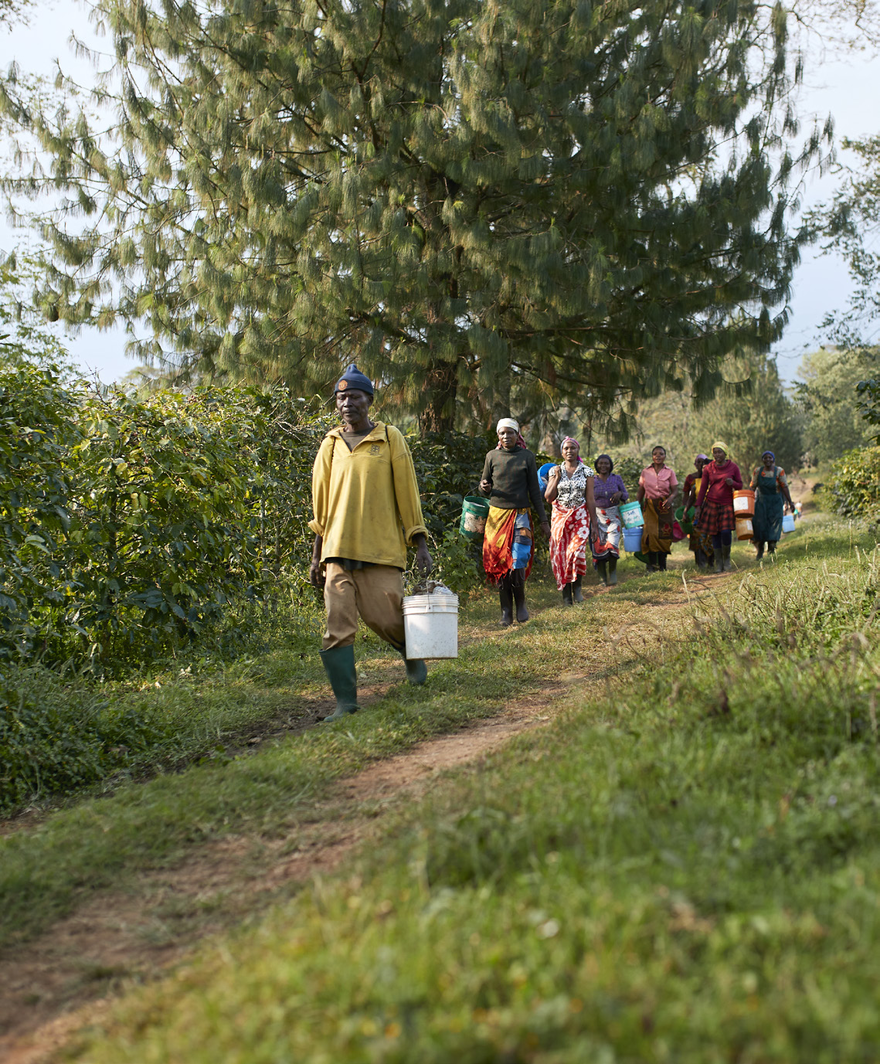
David: We have about 1,000 peo ple working for us at a time. The certifica tion companies outsource the auditing to local accredited companies. We do that ourselves. All auditors are selected and trained by us each year, and all the audits are completely unannounced. We have a very clear process. Everything is directed by satellite, then we knock on the door. If it turns out there is not coffee farming happening, this helps the machine learn ing algorithm. One of the insights we’ve gained is that our auditors don’t need to have PhDs. In a big data world, you just need more data. Therefore, we use a lot of undergraduates from universities, putting them through two weeks of standardised training. They typically do 5-6 interviews a day, using an introductory script and standardised one-hour surveys. Crucially, they don’t score anything or make any val- ue judgment. This removes the conflict of interest from the data collector. They collect the data, then we score and ana lyse it later.
“We provide roasters with better data so they can better understand their supply chains and direct their resources to the right places”
What kind of data do you collect?
David: We collect a wealth of data, for example, on how much and which types of fertilisers farmers are using, irrigation systems, pesticide application, green house gas emissions or the risk of child labour.
Aren’t the farmers sceptical? Why should they cooperate and disclose their farming practices to an unannounced visitor?
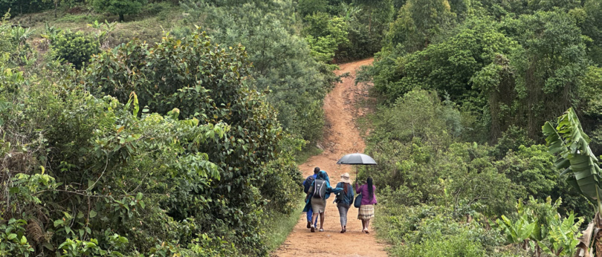
David: In the introductory script, it is very clear- ly stated that there is no individual consequence for that farmer. For our regional assessment work, we would never identify a farmer back to a client, there is no reason. It’s a sample, not a census. We explain to the farmer that we are here to raise awareness of issues amongst a wider audience. In most cases it will be the first time a farmer has been asked for their opinion, with someone wanting to know: What matters to you? What challenges do you face? A farmer owning one hectare of land does not have a lot of people knocking on their door and asking their views. As it turns out, farmers love talk ing about their farm and what their concerns are. The average non-response rate is about 4%.
Landscape monitoring using satellite imagery:
+ 140.000 interviews conducted per year
What does your work with a client like Tchibo look like?
David: We proceed in three steps. The roast ers submit their data, and we verify it by checking directly with the suppliers to confirm the origin of their coffee. In step two, we provide detailed scores and insights about sustainability issues in the roaster’s supply chain or geographic sourcing areas, based on the data we have gathered directly from farmers and workers. Roasters then commit to con tinuous improvement activities designed to address those issues. This includes engaging with their sup pliers to share information about sustainability gaps, participating in multi-stakeholder collaborative ini tiatives that seek to address challenges in the cof fee industry and providing progress transparency by publicly setting multi-year goals for sustainability improvement. Moreover, we require that roasters directly support farmers by funding on-the-ground programmes to address the sustainability issues we assess.
Do you assess the impact of these programmes?
Yes, we do. We verify the roasters’ investments in farmer support projects to ensure these projects reach a sufficient number of farms, based on a combination of a roaster’s purchase volumes per country and our sustainability assess- ment results. This specifically includes us spot check- ing farmers’ participation in programmes by send ing teams to randomly selected farms benefiting from these projects.
If one of your clients claims that their coffee has been ‘sourced responsibly according to Enveritas standards’ – what does that mean?
David: It means that the coffee roaster has made financial and social commitments to im- prove conditions in the areas where it sources its coffee and has demonstrated significant steps taken towards implementing such improvements. Most importantly, it means that roasters are investing in direct support programmes that are aimed at ad dressing sustainability issues – such as providing agronomy training, promoting biodiversity on farms, or working with farmers on proper wastewater man agement in processing. What ‘responsibly sourced’ does not mean is that every farm that a roaster sources from meets every aspect of our 30 sustain ability standards.
Your mission statement says you want to end glo bal poverty in the coffee sector by 2030. This is a very ambitious goal and 2030 is only a few years out. What makes you think you can impact sustain- ability in the coffee sector?
David: The industry spends around USD 250 300 million a year on certification, but we see very little impact. With better data, we can do better pro jects. We set a target for each roaster that we then monitor and implement, solving the right issues in the right places. This does not mean denying mar ket forces but rather finding new and creative ways to reward shareholders, delight customers, protect our planet and help coffee communities thrive.